
Team Effort
This year marked the 60th anniversary of the School of American Ballet’s annual Workshop Performances. The programming was unusually democratic this year.
Plus

World-class review of ballet and dance.
This year marked the 60th anniversary of the School of American Ballet’s annual Workshop Performances. The programming was unusually democratic this year.
Plus

The title of Catherine Tharin’s latest production, “In the Wake of Yes,” is a reference to “Molly Bloom’s Soliloquy,” an inner monologue on womanhood and sexuality, from James Joyce’s Ulysses. Tharin matches the tone of this work as she picks up on an exuberant string of “yeses” from that text. Her witty series of dances explores romance and its complications. At the center of the show is a film by Lora Robertson that lifts the dancers out of the tiny East Village stage and transports them (and us) to scenes of contemporary New York City. Tharin, who danced with the...
Plus
Through its newly opened program, “Other Dances,” Dutch National Ballet kicks off the summer with a slate of lighthearted fare that varies in precise approach but altogether evokes an effervescent mood.
Plus
Taking the historian’s long view, the message within “Last and First Men,” that “the whole duration of humanity, its evolution, and many successive species, is but a flash in the lifetime of the cosmos,” is, to me, ultimately a comfort.
Plus
While the ghosts of, among others, Judy Garland, Jack Benny and the cast of “All in the Family” might be haunting Television City’s soundstage 33 in Los Angeles, the dancers of American Contemporary Ballet (ACB), took metaphoric flight on Thursday when they performed the world premiere of, “The Euterpides.”
Plus
“Into the Hairy”—the 45-minute ballet by choreographer Sharon Eyal and her creative collaborator Gai Behar—sets the tone immediately. Dancers dressed in arachnid-like unitards have a severe look, with black eye makeup that drips intensely down their cheeks, gothic and dramatic.
Plus
Transformation is inevitable—and necessary in order to persist. That’s a theme that runs through two new works staged by Rotterdam’s Scapino Ballet in “Origin,” a program focused entirely on emerging choreographic talent.
Plus
An apron-clad Marjani Forté-Saunders, spotlit on the steps of the St. Mark’s Church sanctuary, rocks from one bare foot to the other while swinging a brown paper bag, presumably filled with groceries.
Plus
For the most dynamic performers, artistry is an embodied quality. Whether through natural aptitude or diligent training—or most often, a combination of the two—the performer transcends the physical, choreographed act of their composition to present something that lingers outside the boundaries of their form.
Plus
Talk about the marriage of music and dance! Following in the footsteps of George Balanchine, whose works with Igor Stravinsky stretched across decades, Lincoln Jones, artistic director and choreographer of American Contemporary Ballet, continues the tradition when his company dances the world premiere of “The Euterpides.”
Plus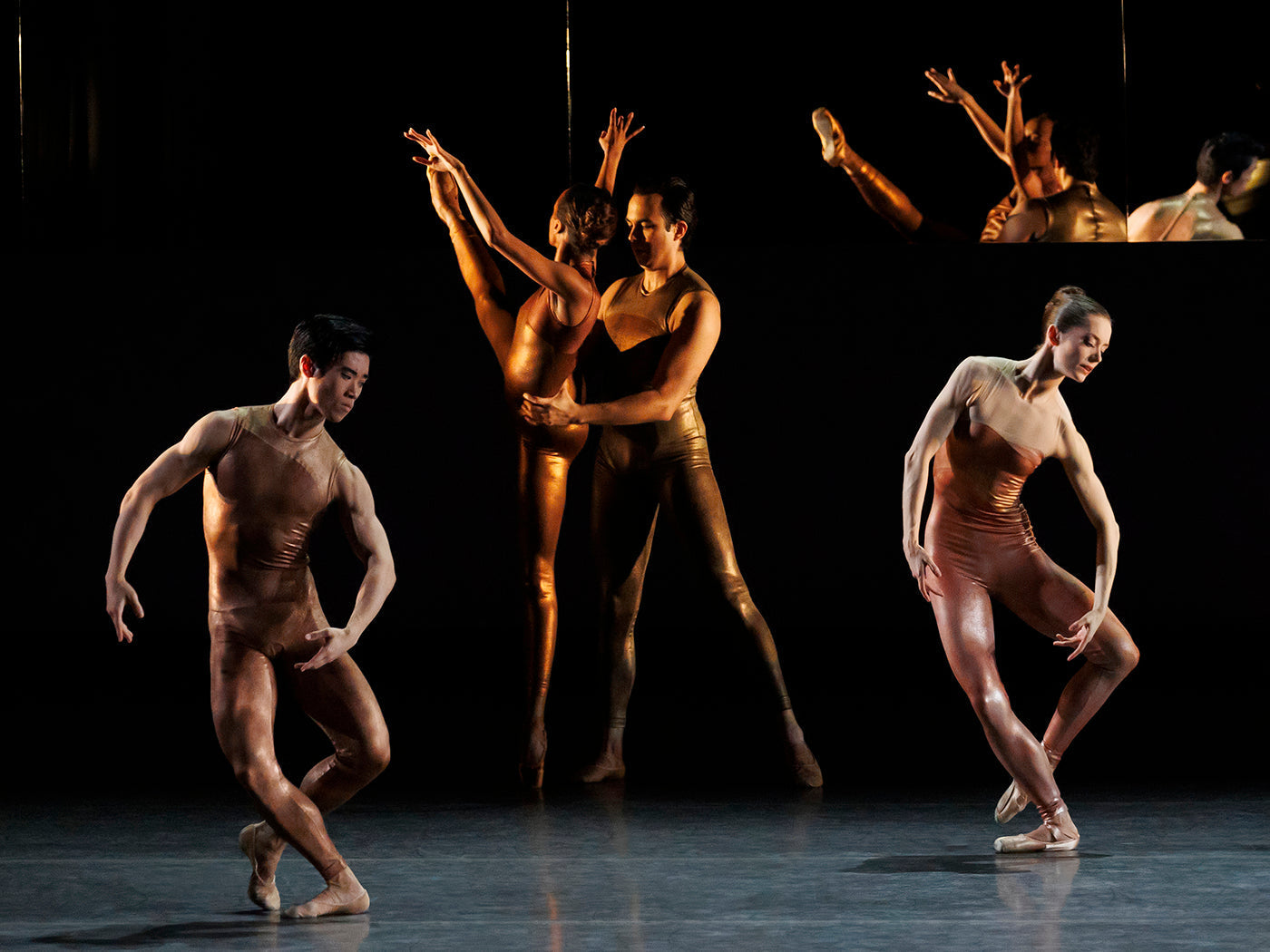
The New York City Ballet mounted no premieres this spring, unless you count the stage adaptation of Kyle Abraham’s Covid lockdown film “When We Fell.” Instead, the company drummed up hype by packing the season with debuts in dances both newish and old.
PlusLong before the dancers take the stage, Dance Theatre of Harlem’s season at New York City Center feels like one of the most energizing cultural events of the spring.
PlusIt is rare for George Balanchine’s grand, bedazzled “Symphony in C” to open a program. Its champagne-popping finale for 52 dancers tends to be a nightcap.
Plus
The Spring is Blooming festival, by Dance Reflections by Van Cleef & Arpels, now in its fifth year, has become a highlight of the spring dance circuit.
PlusAs the audience come to their feet at the end of this ballet there is a noted difference to be seen on stage. Three women stand with joined hands, taking their call as the romantic leads of a loud and proud lesbian ballet.
PlusOne of San Francisco Ballet’s greatest assets is its home venue, the Beaux-Arts style War Memorial Opera House, with four rings of seating that require performers to project their energies practically to the exosphere.
Plus