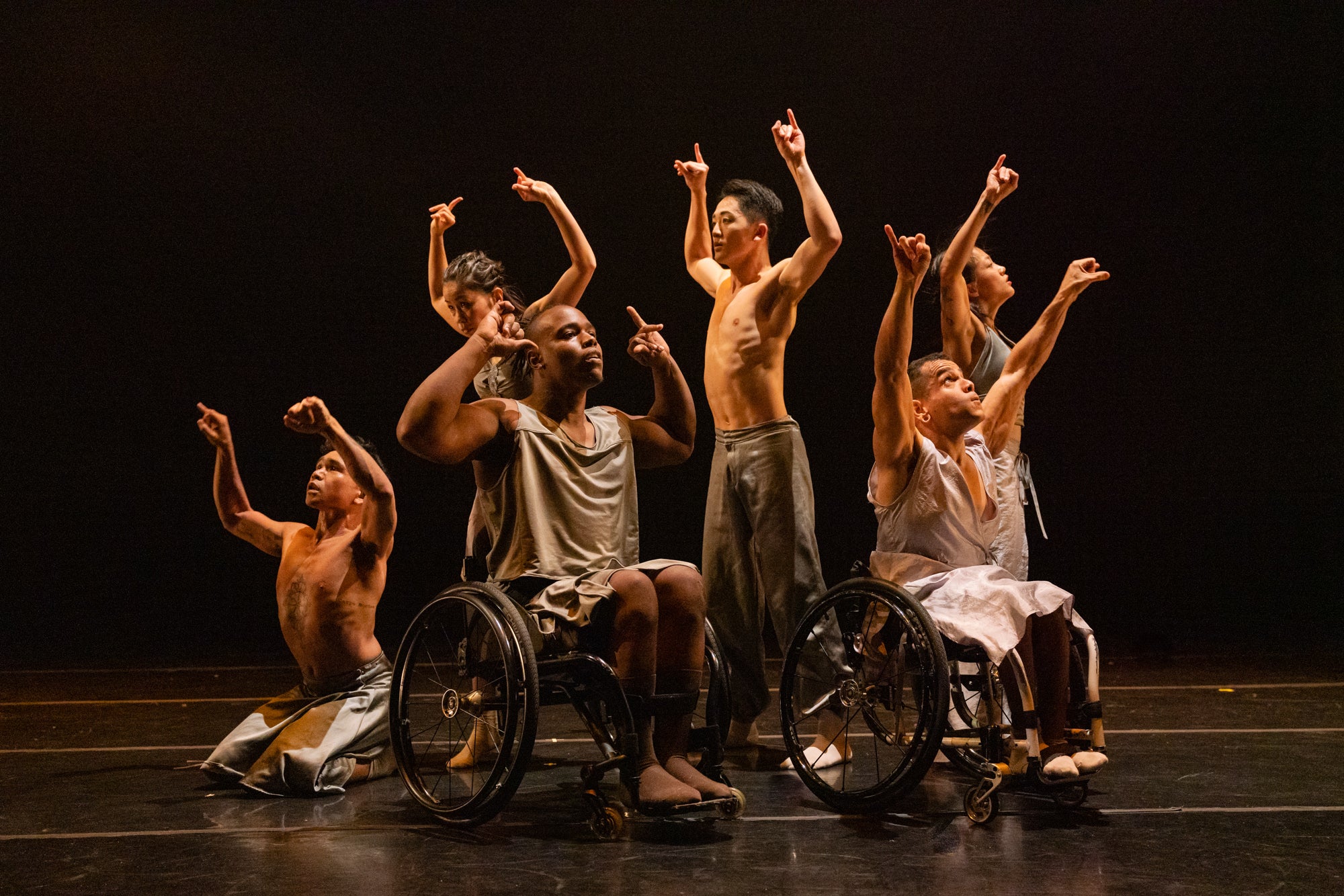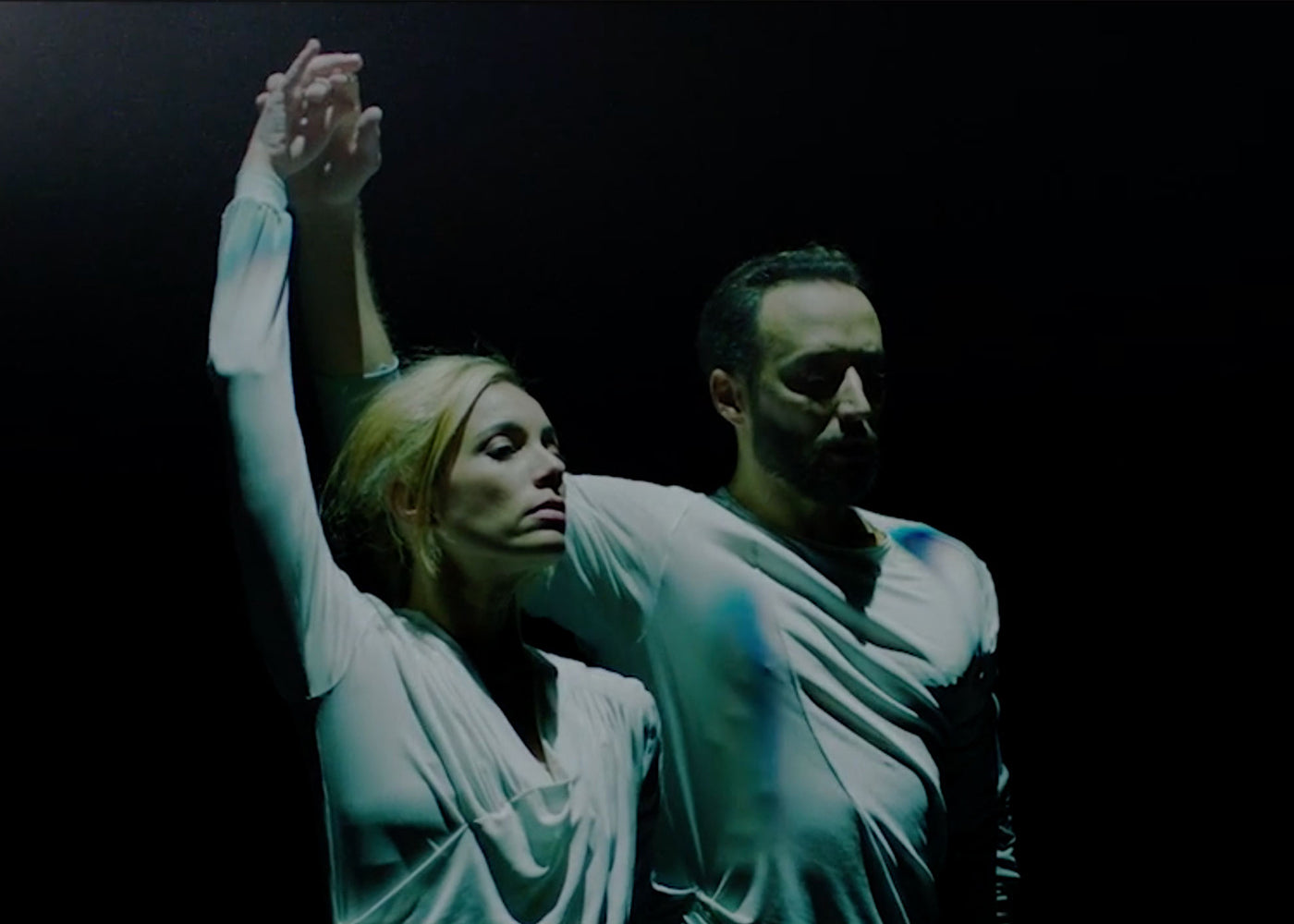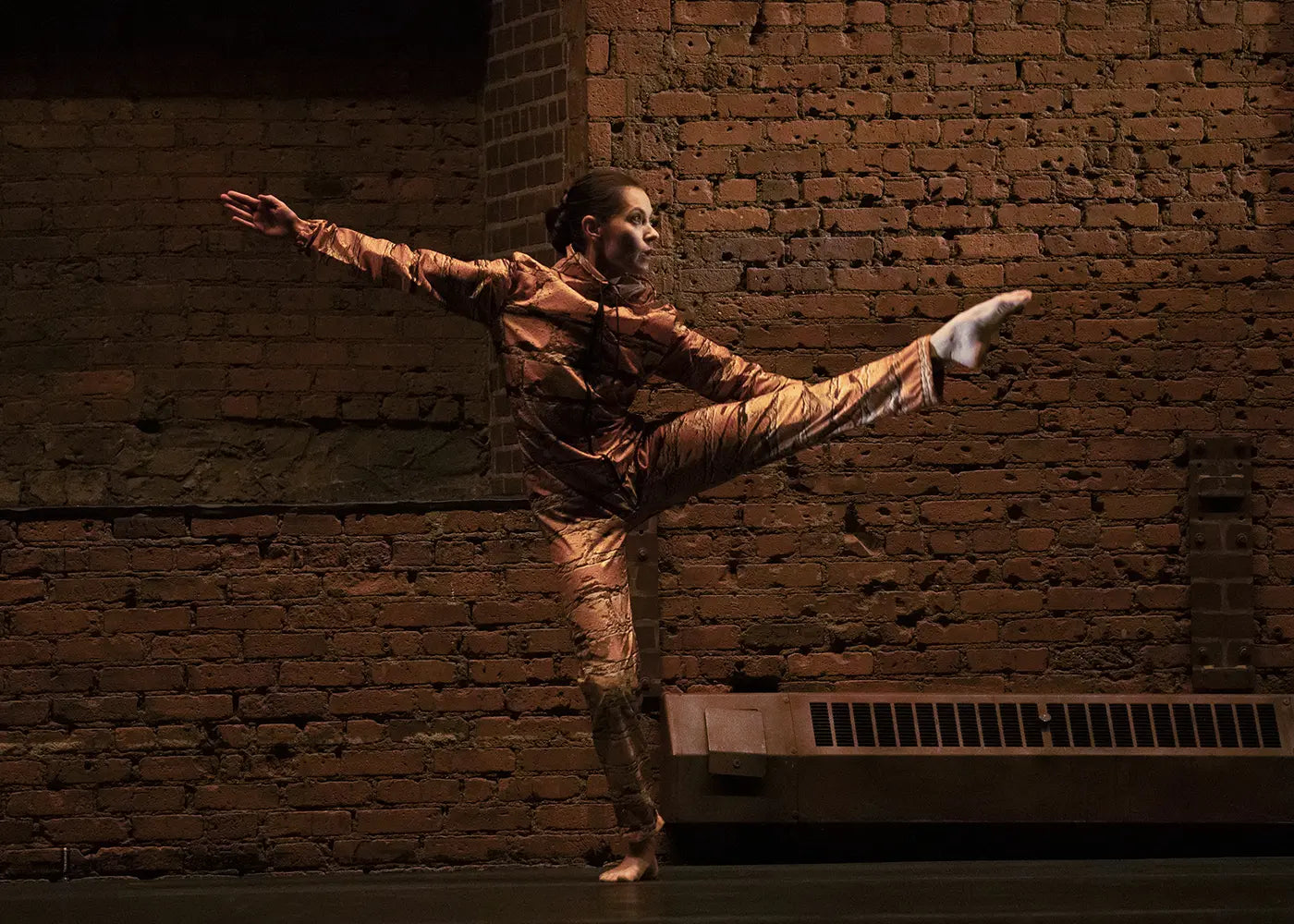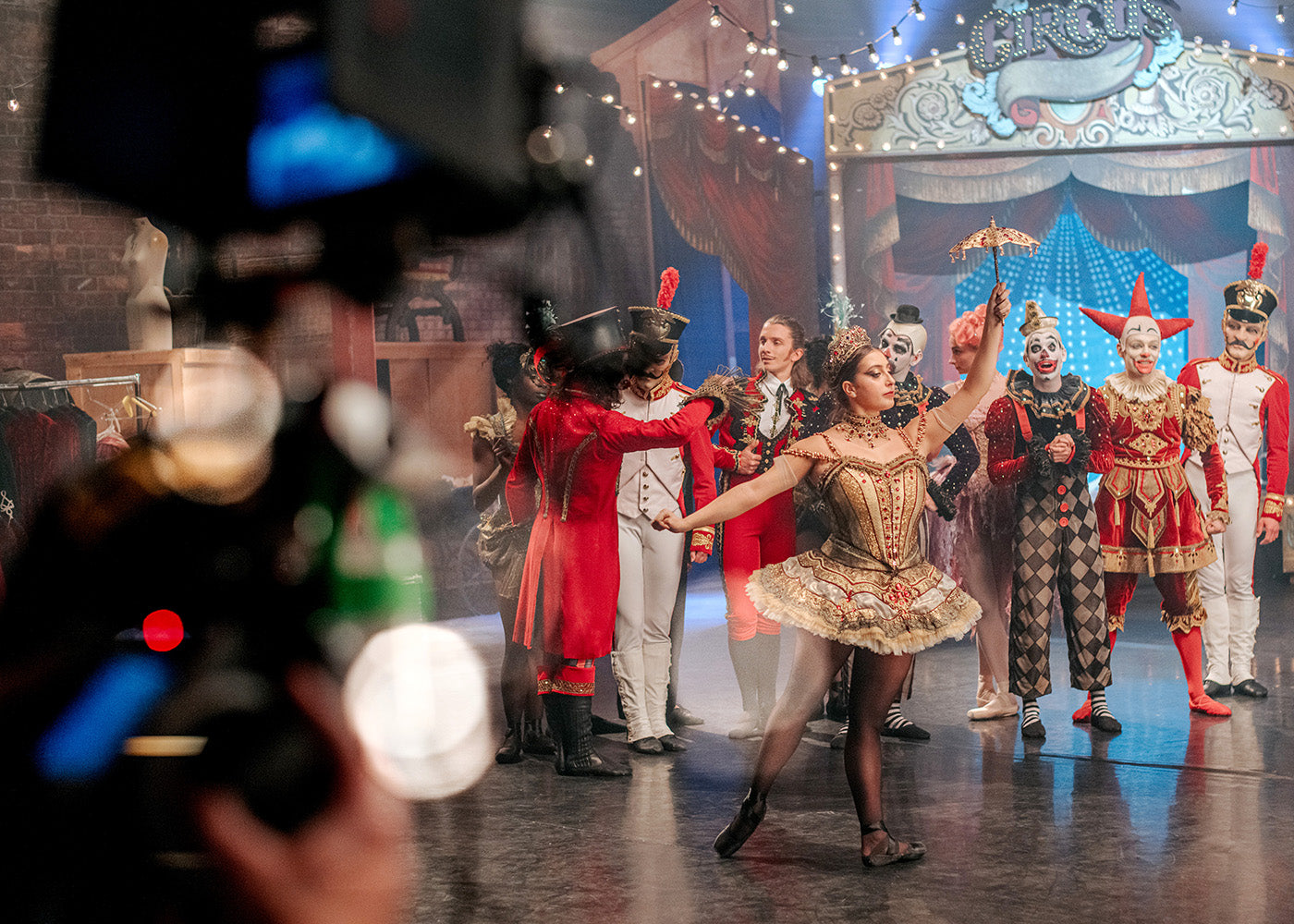

Three young dancer/choreographers debuted new ballets in Washington, D.C., last month, each with distinct strengths: Clifton Brown is highly musical, Gemma Bond has a great sense of structure and Marcelo Gomes excels at developing character.
The first of two programs New York City Ballet brought to the Kennedy Center in March featured five ballets, including three works by George Balanchine: “Divertimento No. 15,” “Tschaikovsky Pas de Deux,” and “Symphony in Three Movements.”
I can’t remember the first time I saw “Swan Lake” or “Serenade,” but I will never forget the first time I saw Jerome Robbins’s “Dances at a Gathering.” I was twenty-six and had just flown from California to New York City for the first time in my life. Equally frightening: I had just received a marriage proposal from the man I’d begged, for years, to marry me—and suddenly I wasn’t sure whether I should marry him. I sat smack in the middle of the orchestra section for a New York City Ballet matinee and up went the curtain and out...
Many balletomanes (rightly) worship “Onegin” but few of them have read the eponymous novel by Pushkin, a founding father of modern literature in Russia. Yet, the book and ballet are closely intertwined, both in text and steps. Prey to mal du siècle, Onegin is said to cast “a mournful gaze” on the “dreary stage” at a ballet performance. He yawns and leaves. In hindsight, isn’t it ironic, given that Cranko’s masterpiece has the opposite effect on the audience? The ballet arouses passions, whether positive or negative. Some dismiss it as an offence to the inner realm of Pushkin and Tchaikovsky—Balanchine...
Heartbreakingly beautiful, sublime and an utter triumph, John Neumeier’s production of “Orpheus and Eurydice,” a collaboration between the Joffrey Ballet and Los Angeles Opera, is the epitome of high art. Having debuted in Chicago last September and co-produced by L.A. Opera, Lyric Opera of Chicago and Staatsoper Hamburg, the work that premiered in 1762 Vienna and was composed by Christoph Willibald Gluck, makes use of the 1774 Paris version (“Orphee et Eurydice”), with a libretto by Pierre-Louis Moline.
If ballet were an Olympic sport, BalletX’s Andrea Yorita would be taking home the gold for her performances in the company’s spring series at the Wilma last weekend. She dazzled in Matthew Neenan’s “Increasing” and Trey McIntyre’s “The Boogeyman.”
What a beguiling double bill ... Esteemed American company Ballet Hispánico bring the heat to a particularly biting and misty Edinburgh. It's passionate, inventive work to immerse yourself in, evoking long, hot summer nights. We can but dream.
There’s a moment at the end of Balanchine’s “Divertimento from Le baiser de la fée” in which the two principal dancers embrace center stage, the heroine of the ballet grasping her hero’s waist, leaning on a bent leg on pointe, arched over completely backwards. “It’s as if she contains two different forces at the same time,” New York Times critic Alastair Macaulay writes:
In the ballet world, female choreographers remain, unfortunately and infuriatingly, the exception rather than the norm. Ballet British Columbia artistic director Emily Molnar shines a spotlight on this imbalance with a new bill of ballets from Crystal Pite, Sharon Eyal and herself—a welcome redress to a centuries-old deficit, made even more so by its cool absence of progressive intent. The programme champions women not by specifying feminist themes but by simply making space for female dancemakers to present their choreography—a resounding statement in itself.
At the Kier Choreographic Award semi-finals my shoes cut loose. At the Kier Choreographic Award semi-finals, independent of me, that is, my shoes cut loose. Lobbed by an enthusiastic audience member, relishing their liberty, my left shoe, it flew across the dance floor, airborne and free. It landed with a thud. The right shoe, it was a log that tripped another audience member mid-dance, before it transformed from obstacle into a fish flipping on land. My shoes, free of me, had the night of their lives, I expect. And when it came time to collect my shoes from the stage,...
“Körper” is a study of the human body, a deep-dive into its physical form as well as the outside forces that shape our grasp on anatomy, sexuality and mortality. Sasha Waltz, one of Germany’s foremost dance theatre choreographers, created the work in 2000 as the first in a trilogy, and it’s since toured some 50-odd cities, dividing audiences around the world with its unyielding pitch and arduous manoeuvring.
Marie-Agnès Gillot is one of a kind, one in a million. She has arms and legs for days, which she sinuously moves like tentacles, spectacular extensions which she uses as air-piercing arrows and a stage charisma that could hypnotize you from the highest gallery seat. A Guillem-like dancer of intense virtuosity, she had world-class potential. But she’s never completely made the most of it and her final “Boléro” translates just that. Her 20-minute solo indeed read like a resigned swan song: yet, a beautiful one.
Two performers crawl in on hands and knees wearing neon green, hooded coveralls—the lightweight papery kind made for working in a sterile environment—and clusters of balloons pinned to their backs.
Will Rawls makes boundaries visible by defying them. Known for the disciplinary and topical range of his projects, the choreographer, director, and performer approaches issues of representation in “[siccer],” a multi-part, multi-site work co-presented by L’Alliance New York’s Crossing the Line Festival. A live performance at Performance Space New York...
It is always interesting when multiple theme steps emerge over the course of a mixed repertory evening, but it is uncanny on one featuring five different ballets, each with a different choreographer and composer, covering a twenty-year span (2005-2025).
Zvidance premiered its new work “Dandelion” mid-November at New York Live Arts. Founded by Zvi Gotheiner in 1989, Zvidance has been a steady presence in the New York contemporary dance scene, a reliable source of compositional integrity, and a magnet for wonderful dancers.
Cleveland native Dianne McIntrye received a hometown hero's welcome during her curtain speech prior to her eponymous dance group thrilling the audience in her latest work, “In the Same Tongue.”