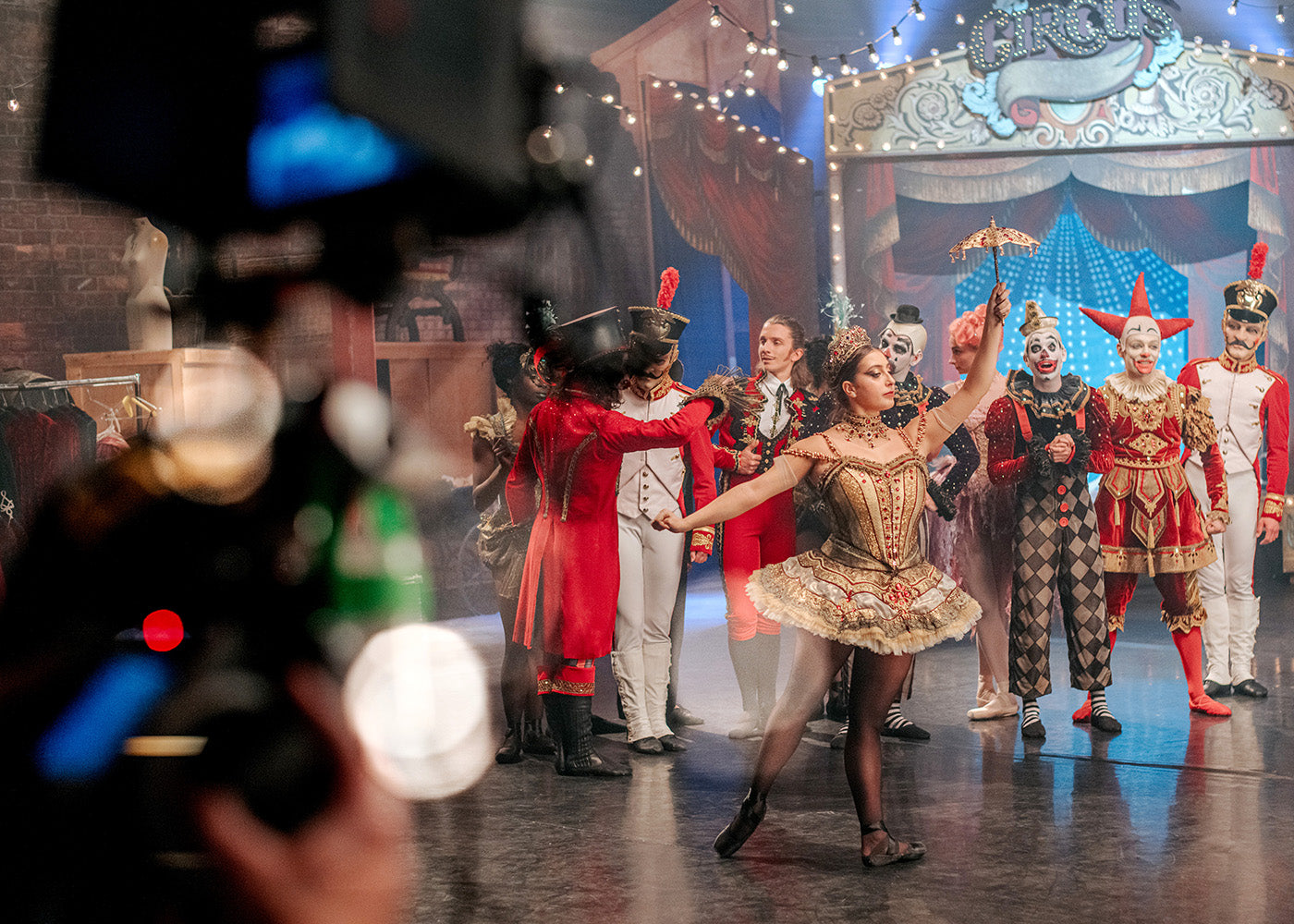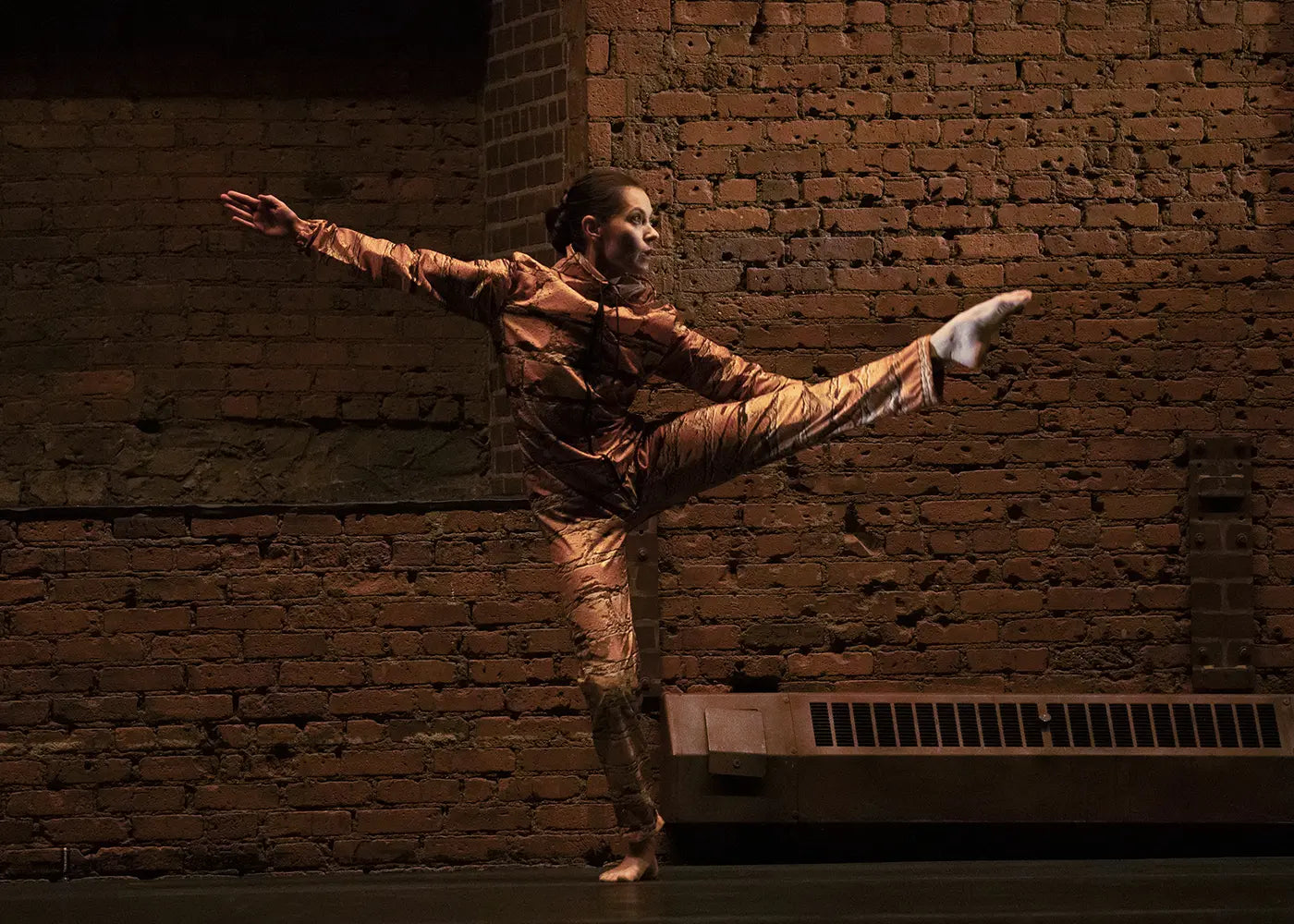
The Swan, with choreography from David Dawson and written and filmed by Eve McConnachie, is of course inspired by “Swan Lake,” and focuses on the first six minutes of Act 4. It acts as (all being well next year) a wonderful taste of Scottish Ballet's forthcoming full adaptation and tour.
While many smaller American ballet companies hang on month to month through the pandemic to learn the ultimate shape of their fates, other troupes have faced harsh consequences swiftly. Just three months after California’s Covid restrictions, the board of the Sacramento Ballet voted to terminate Amy Seiwert’s tenure as artistic director, and the shifts she’d begun there—away from classical chestnuts and regional-level Balanchine and towards European-influenced new works—ended abruptly. Swiftly, Seiwert announced that she was returning to her project-based company in San Francisco, Imagery, which among other endeavors (and tours to the Joyce Theater Ballet Festival and Jacob’s Pillow) produces...
In a window longer than it is tall, within a white frame, there is a room. A room as a blank canvas. A room as a piece of paper awaiting the first gesture of a drawing. The optical illusion of this window through to a room held within a white frame makes the information it holds appear three-dimensional: my eye registers a room and the white frame becomes a flat two-dimensional screen, on my computer screen, by comparison.
Based in Glasgow, and recently celebrating three years since they formed, Project X have a strong aesthetic and highly prolific output with a focus on history, culture and the lived experience of the African and Caribbean Diaspora. These two brand new short films from the multi-disciplinary company, screening as part of Black History Month, take on a female perspective. Both films rejoice in sisterhood and a strong sense of selfhood, both are beautiful celebrations of black women, and feel powerful and moving in distinct ways.
Now, it seems, more than ever, do we need art. And while Covid continues its assault on a huge swath of our population, relief came to this reviewer in the form of a live-streamed concert by butoh master Oguri. Bringing laser-like intensity to each and every performance while simultaneously creating portraits of staggering resilience, this supreme mover continues to surprise, stun and satisfy with his dances, whether solo or in conjunction with others.
What was live, I can pause, and it occurs to me that not being able to conveniently pause a live performance was one of the things I most enjoyed about it. It was live. It is live. It was/is roaring along, independent of my will. And in having no control over any part of its trajectory, I disappeared completely, in the best possible sense. I wasn’t me in the theatre or hall, but a series of notes, a flurry of limbs, a lightness, an extension, particles illuminated by stage lighting; anything. In this freedom, a different kind of pause. A...
In the beginning of August, Marquee TV—a performing arts streaming platform—unveiled its inaugural “Summer Short Film Festival,” a curated selection of 28 short films of dance and music from around the world. The festival is a result of the partnership of Marquee TV with the San Francisco Dance Film Festival and Scotland’s Screen.dance festival. All the entries of “Summer Shorts” are offered for free viewing until the end of the month.
Edinburgh is quiet. In August, the city normally swells with people jostling to get into theatres, pubs, shipping crates, beer gardens, and tents. The festivals are a key part of Edinburgh’s identity, and while there are often murmurs within the industry that a break from, or a scale back of the festivals wouldn’t do the city any harm, nobody wanted a break this way.
It begins in a place I know well. In the Great Hall of the National Gallery of Victoria. Benedicte Bemet, who was promoted to coryphée in 2013, to soloist in 2016, to senior artist in 2018, and to principal artist in 2019 with The Australian Ballet, is seated at the far end of the hall. Beneath the prismatic revelation of Leonard French’s Great Hall ceiling (1963–67), Bemet is alone.
With only a few words—“Lately, it has been considerably harder to rise,” Jacques Heim, founder and artistic director of the risk-intensive, hyper-physical dance troupe, Diavolo|Architecture in Motion, has managed to capture how so many of us are feeling during the unprecedented crisis perpetrated by Covid-19. These words, written by performer France Nguyen-Vincent frame Diavolo’s first foray into film, This Is Me: Letters from the Front Lines, which was commissioned by the Soraya and is available to view for free on that organization’s Facebook page.
The finest choreographers have not only a signature style, but walk their own creative paths—think Pina Bausch, Merce Cunningham, Crystal Pite, Michael Clark, Botis Seva and Sharon Eyal. All are idiosyncratic visionaries with their own stylistic quirks and traits. All have raised eyebrows, and raised the roof with their work, which may not be rooted in the comfort of traditions and familiarity, but rather, leave indelible marks on the viewer. If you can make an audience member squirm, laugh, feel puzzled, or even aroused—sometimes, all at once—job done! The best artists create worlds within worlds. So it is with genius...
Nederlands Dans Theater’s brand new work “Standby” is a dance of irresistible energy, galvanizing athleticism and touching poignancy; it’s also an ingenious and masterly realized work of art created in the time of pandemic. Choreographed in just three weeks and captured exclusively on film to be streamed on the company’s website and NDT’s YouTube channel, “Standby” is described by its creator, Paul Lightfoot, as a ballet inspired by the limitations and possibilities of social distancing. “Can we connect without touch?” With this brilliant dance, the choreographer answered this question affirmatively.
Watching Matthew Bourne's reworked version of the “star-cross'd lovers,” I was briefly reminded of Veronica, played by Winona Ryder, in the dark 1988 comedy by Daniel Waters and Michael Lehmann, Heathers, and her line, “my teen angst bullshit has a body count.” Yes, this is the darker side of Bourne's repertoire,...
Beneath blue California skies, manicured trees, and the occasional hum of an overhead airplane, Tamara Rojo took the Frost Amphitheater stage at Stanford University to introduce herself as the new artistic director of San Francisco Ballet.
After a week of the well-balanced meal that is “Jewels”—the nutritive, potentially tedious, leafy greens of “Emeralds,” the gamy, carnivorous “Rubies,” and the decadent, shiny white mountains of meringue in “Diamonds”—the New York City Ballet continued its 75th Anniversary All-Balanchine Fall Season with rather more dyspeptic fare.