
Shakespearean Twist
It’s a drag to report that I had the urge to walk out of my first performance back in NYC after a long summer break.
Plus

World-class review of ballet and dance.
Carolyn Carlson stands as one of the defining figures of contemporary dance. An American visionary shaped by the radical kinetic thinking of Alwin Nikolais in 1960s New York, she arrived in Europe in 1971 as a seismic force, dismantling the rigid hierarchies of the classical world to forge a new path for modernism. In 1974, she was appointed Étoile Chorégraphe, a title created specifically for her at the Opéra de Paris, where she led the pioneering Groupe de Recherches Théâtrales until 1980. Decades later, she would once again redraw institutional boundaries as the founding director of the Venice Biennale’s first autonomous dance sector. Carlson’s artistic thought has since crossed borders and systems, from the Finnish National Ballet to the CCN Roubaix, culminating in her election to the Académie des Beaux Arts in 2020.
Performance
Place
Words


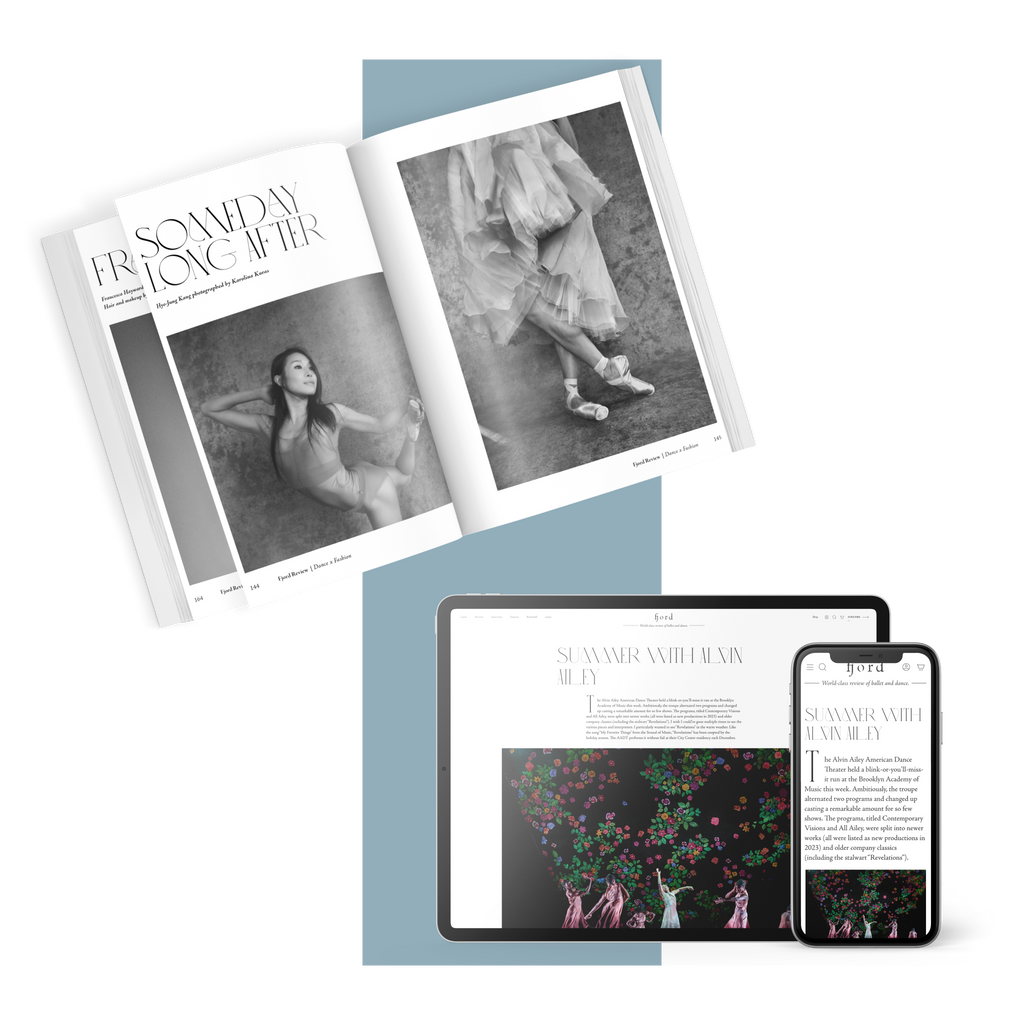
“Uncommonly intelligent, substantial coverage.”
Your weekly source for world-class dance reviews, interviews, articles, and more.
Already a paid subscriber? Login
It’s a drag to report that I had the urge to walk out of my first performance back in NYC after a long summer break.
Plus
Things seem to be clicking in place for Mamela Nyamza. Her latest work “The Herd/Less” is touring the world while her recognition as a choreographer with a distinction for the subversive and political has earned her a Silver Lion for dance at the Venice Biennale.
Plus
After taking a field trip in the second grade to see the Alvin Ailey American Dance Theater, Ronald K. Brown was inspired to take his first dance class at Bedford Stuyvesant Restoration Corporation, a Brooklyn-based community center.
Plus
As much as it is a cliché to reference, there is something special in finding a work that so aptly fits that famous quote from George Balanchine: “See the music. Hear the dance.”
Plus
comments