“You—you alone will have the stars as no one else has them . . .” Antoine de Saint-Exupéry's Le Petit Prince in all its aphoristic wisdom will soon be on stage in the form of a ballet, to be performed by the National Ballet of Canada.
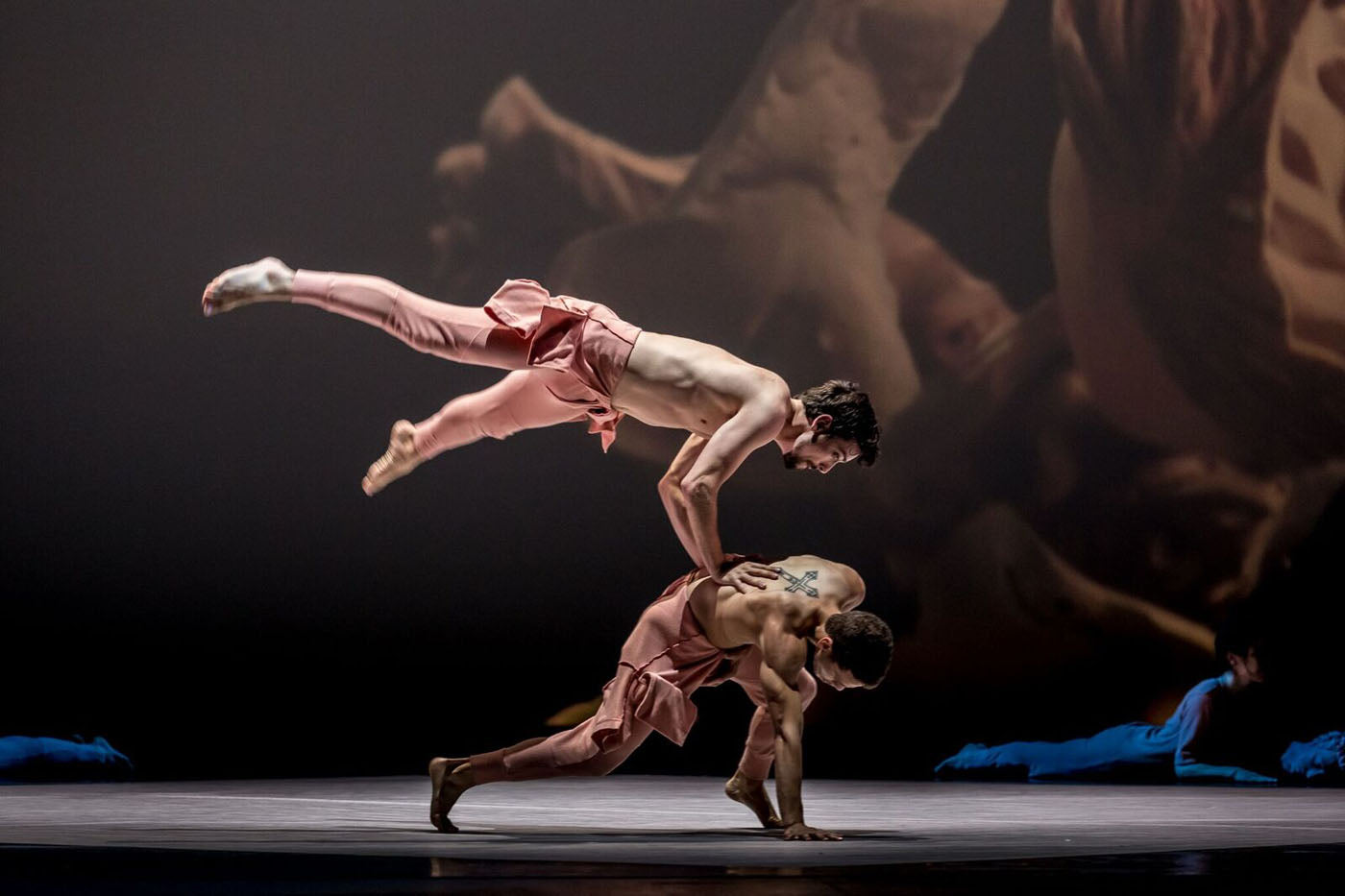
Complexions Contemporary Ballet, by virtue of its name, conjures graceful athleticism with the more formal rigors of ballet. Co-founded by Dwight Rhoden and Desmond Richardson in 1994, the 15-member troupe is testament to sculpted lines and a hyperphysical aesthetic, one whose brand is instantly identifiable. Indeed, the Rhoden/Richardson partnership has not only built a company that tours the world, but has served as one of dance’s most illustrious creative pairings, with Richardson, still performing at 47, Rhoden’s muse.
One might say that they’ve got ballet in their blood. Colleen Neary has been dancing since she was nine; her husband of nearly 30 years, Thordal Christensen, since he was six. This year, the co-directors of Los Angeles Ballet, founded in 2006, celebrate the troupe’s 10th season, a near-miraculous feat, really, in a town not known to be particularly pointe shoe-friendly.
Do you recall seeing your first ballet? No, says Francesco Gabriele Frola, first soloist with the National Ballet of Canada, but he does recall the first one he was in. “Every time my mother danced “La fille mal gardée,” she was pregnant,” he says. With two brothers and a sister, “after four times, she had enough,” he laughs.
After taking her final bows as Juliet at the Metropolitan Opera House with American Ballet Theater in June of 2007, Alessandra Ferri may have left the storied company she had danced with since 1985, but, as she said in a recent phone interview from her home in Manhattan, she certainly did not retire.
“Fiddler on the Roof” returned to Broadway this month, with London-based choreographer Hofesh Shechter maintaining most of the original steps but relaxing the dancers’ postures and loosening the dances’ spacing for an effect of chaotic feeling erupting at ritual moments that I suspect Robbins would have loved. In any case, it seemed like a good moment to reprint a short Newsday feature as well as uncut interviews with some of Robbins’ favorite dancers, Mikhail Baryshnikov, Wendy Whelan and Damian Woetzel, conducted on the occasion of an exhilarating and comprehensive Robbins Celebration at New York City Ballet in 2008. All three of these brilliant...
“I'm interested in the democratization of dance and theater, and redefining what constitutes a stage—both aesthetically and socially.” That’s Sarah Elgart speaking, a force of nature who has been at the forefront of dance in L.A. as a choreographer, director and producer for more than three decades. Still model-thin with blue eyes and long blonde hair, Elgart has not only engaged audiences with site-specific projects that have transformed bus terminals, airports and museums into veritable action paintings, but she’s also choreographed for film, commercials and television, working with high-profile directors that include Catherine Hardwicke, David Lynch and J. J. Abrams.
For his first New York City performance, Bronx-born Rudy Perez presented a program of dance solos. It was the mid-1960s, and the venue was one of those “alternative” spaces that sat about 50. As he began the concert, Perez says that he noticed there were only four people in the audience—and they were all sitting together.
With 24 dancers and six actors, “The Art of Falling,” a collaboration between Hubbard Street Dance Chicago and the improvisational comedy troupe, the Second City, is not only startlingly original, but, in a way, unclassifiable.
In today’s high-tech world, where trends blow up the Twittersphere and Facebook like a Tesla on Insane Mode—going from 0 to 60 in under three seconds—the current dance scene also has its share of fast moving choreographic innovators: Think Christopher Wheeldon, Justin Peck or Crystal Pite of Vancouver’s Kidd Pivot.
Jacques Heim has been obsessed with geometric shapes for years. After founding the risk-intensive, hyper-physical dance troupe DIAVOLO | Architecture in Motion™ in Los Angeles in 1992, Paris-born Heim translated that passion into full-blown, custom-designed stage sets. Included are a 5,000-pound, 16-foot rotating aluminum wheel (“Humachina”), a large, scary-looking vertical pegboard that could serve as the centerpiece at an S&M soiree (“D2R”), and a 14-by-17 foot rocking boat (“Trajectoire”).
Not too many dancers have a desire to perform in Newfoundland. But Louise Lecavalier, who got the idea from reading Annie Proulx’s book, The Shipping News, is decidedly unlike any dancer—past or present—in the universe. Indeed, it’s safe to say that nobody moves like Louise Lecavalier. The erstwhile star of Édouard Lock’s Montréal-based troupe, La La La Human Steps from 1981-1999, Lecavalier honed her fierce and extreme style that was—and remains—instantly recognizable.
The title of this dance interpretation of The Tempest highlights a notable departure from canon. In “We Caliban,” Shobana Jeyasingh imagines Shakespeare’s titular native in the collective sense—a tribe, a spirit and a place at once.
Long before the dancers take the stage, Dance Theatre of Harlem’s season at New York City Center feels like one of the most energizing cultural events of the spring.
It is rare for George Balanchine’s grand, bedazzled “Symphony in C” to open a program. Its champagne-popping finale for 52 dancers tends to be a nightcap.
When we think of countries that have shaped the world of dance our mind will often drift to the United States, Russia, or Germany. But what of Luxembourg?
In times of rapid change, predicting the road ahead can seem to be a fool’s errand. But on a spring afternoon at Lincoln Center, I feel confident in this assertion: the future of dance is very bright.