Ce site Web a des limites de navigation. Il est recommandé d'utiliser un navigateur comme Edge, Chrome, Safari ou Firefox.

Renegades

Last week as certain ageist opinions were being aired in Washington, D.C., five performers in a tiny NYC East Village theater quietly made a case for the power of creative longevity. “Unstill Life,” created and performed by Rinde Eckert, Risa Jaroslow, Margaret Jenkins, Jon Kinzel, and Vicky Shick, presented by David Parker and the Bang Group, opened for the first of four sold-out shows. The bicoastal project will continue March 21–24 in Oakland, CA. Clocking in at barely more than 30 minutes, the show is intimate and fleeting. Like life, it seems to say, look away and you’ll miss it.

Performance

“Unstill Life” created and performed by Rinde Eckert, Risa Jaroslow, Margaret Jenkins, Jon Kinzel, Vicky Shick

Place

Presented by The Bang Group, Arts on Site, New York, NY, March 7, 2024

Words

Karen Hildebrand

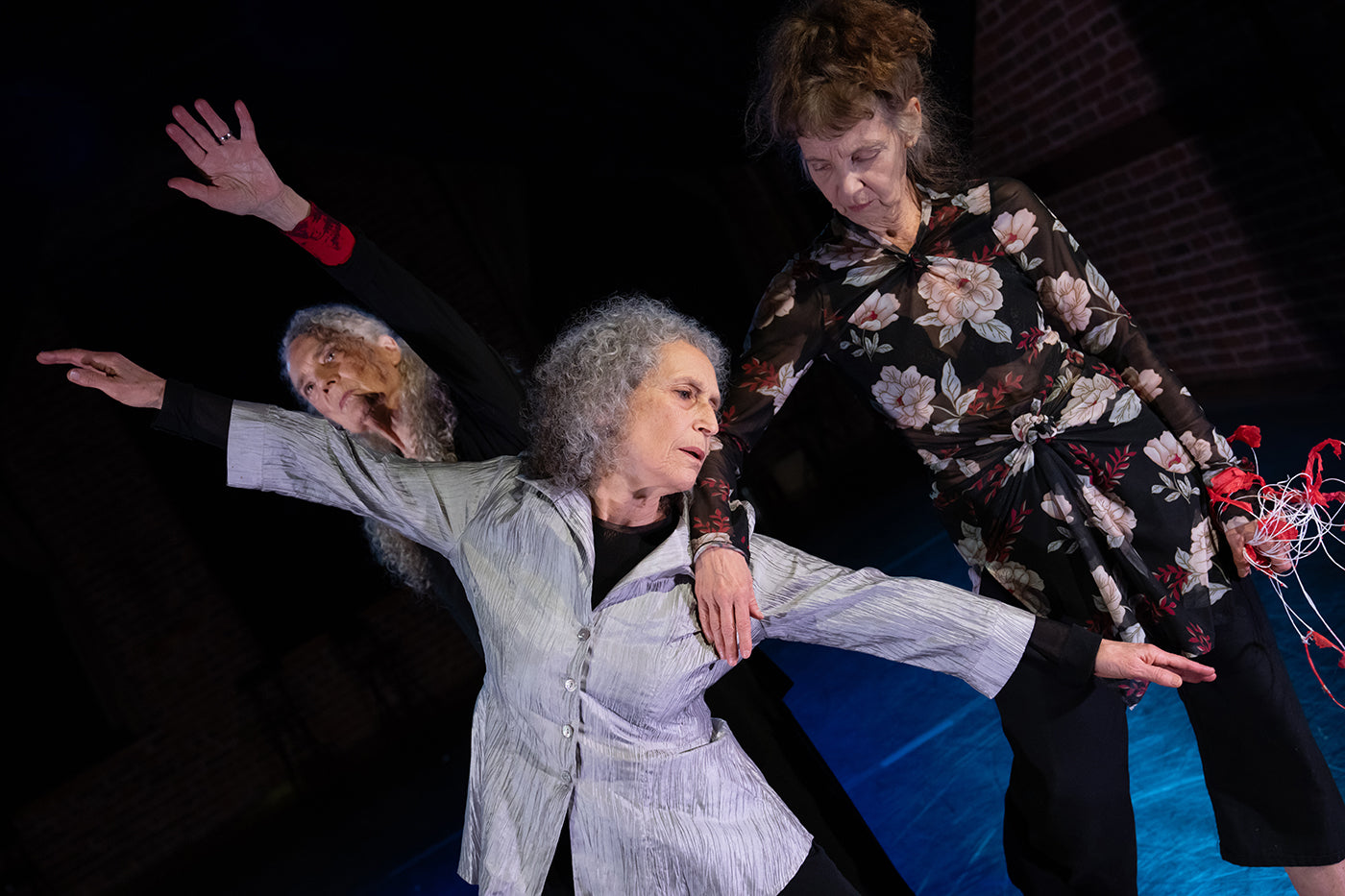
Margaret Jenkins, Risa Jaroslow, and Vicky Shick in “Unstill Life.” Photograph by Julieta Cervantes

If laid on a map, the career paths of these celebrated performers would crisscross the post-modern dance landscape with overlapping affiliations, among them Merce Cunningham, Twyla Tharp, Sara Rudner, Trisha Brown. As individuals, they’ve spent more than four decades performing and directing others. The Margaret Jenkins Dance Company recently celebrated its fiftieth anniversary. To see these artists come together as a multi-disciplinary quintet (dance, theater, music, visual art) is a rare treat. 

“Unstill Life” is deceptively modest. A few simple props—stool, bench, a red paper lantern, an ankle strap made of sleigh bells. Musical instruments appear out of nowhere as Eckert, a theater artist with an operatic singing voice, takes them up: an accordion, a pair of wooden boxes the size of oven mitts to be clacked and rubbed to fascinating amplified audio effect. The piece opens with a seated Jenkins batting, like a cat, the flattened paper lantern between her hands. 

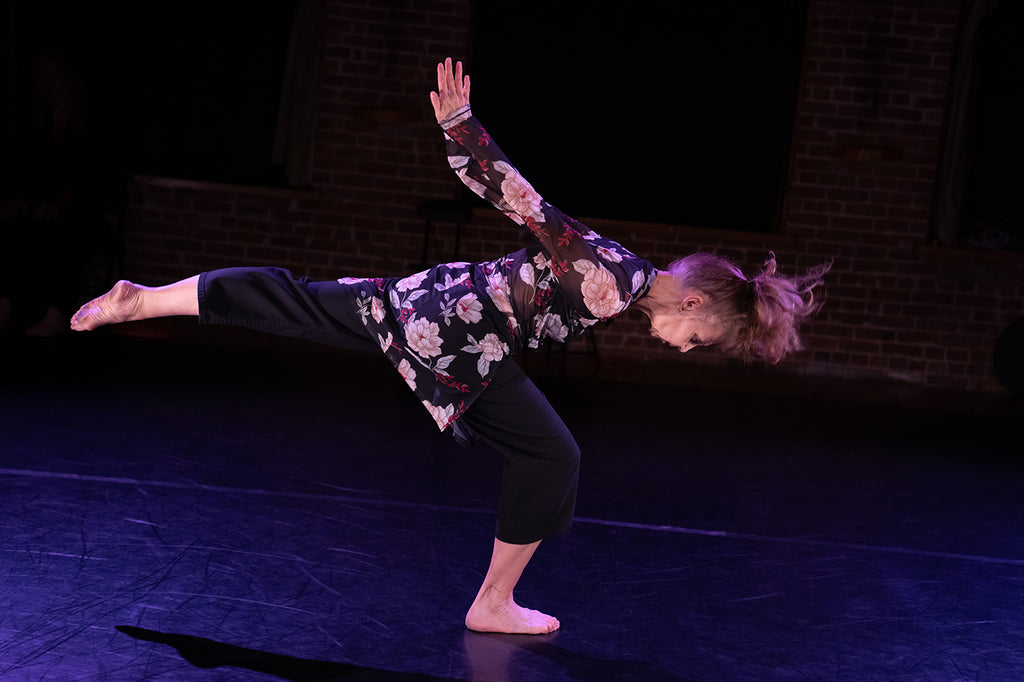
Vicky Shick in “Unstill Life.” Photograph by Julieta Cervantes

Vicky Shick in “Unstill Life.” Photograph by Julieta Cervantes

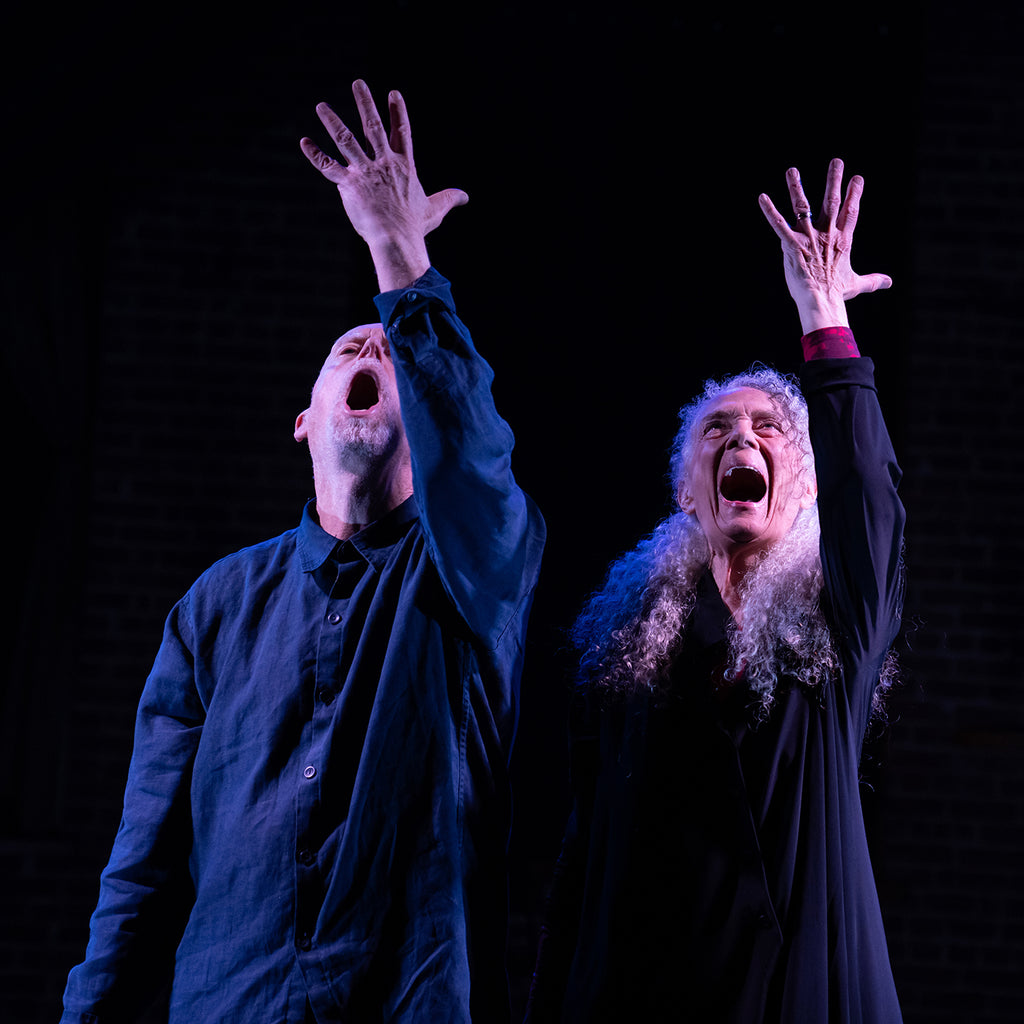
As its title suggests, “Unstill Life” is a portrait that becomes animated with gesture and lowkey dance moves under a painterly glow of lighting created by Kathy Kaufmann. It’s a study in economy—every flick of wrist and tilt of chin is evidence of the way less is more. In an elegant duet, Jenkins and Eckert stand side by side and conduct hand gestures in unison. They each place a thumb to an opposing cheekbone, close a palm around the eye as if to gather it within a fist, then fling the contents out, rubbing fingers together to remove a clinging residue. 

All five performers remain onstage for the duration, receding into shadow when not actively centerstage. While Jaroslow performs a solo, for instance, Jenkins and Shick lean their forearms against the side wall like a pair of women sharing a cigarette outside a bar. Shick in particular adds a striking full body precision and clarity to the mix. When a small ripple plays across the ribs of her back, it becomes headline news. She moves a hand to her hip and steals the scene completely. Shick also acts as a thread to interlace the various duos and trios, moving the group in a new direction by gliding her arm along a shoulder or placing her fist to a sternum to initiate a step back. 

Only near the end of the show are we made privy to the project’s rules for engagement. Actress Kathleen Chalfant delivers in voiceover a list written by Eckert that includes such statements as, “Nothing concrete. Nothing abstract. Avoid novelty. Nothing familiar. No observation. No cynicism. Nothing that can be interpreted. Some things are allowed: Volume. Force. Pressure. Speed. Other things may be present: Hunger. Joy. Bafflement.”

No narrative, yet I see meaning everywhere. Fluttering fingers are bird wings beating. Cupping a chin suggests contemplation, a palm to the face could signal distress. Why does Shick use a fist rather than the flat of her palm to nudge Jaroslow’s sternum? The conversations are intimate, each performer speaking their own peculiar language. They echo, bump, interrupt, and intersect with both careful attention and the spontaneity of chance. How much is improvised and how much is set?

Rinde Eckert and Margaret Jenkins in “Unstill Life.” Photograph by Julieta Cervantes

Rinde Eckert and Margaret Jenkins in “Unstill Life.” Photograph by Julieta Cervantes

No rule against humor, and there is plenty, subtle and absurd. When Eckert pulls a harmonica from his pocket, I expect him to play. The surprise is that he vocalizes at the same time. It’s a duet for one mouth. Later, Eckert and Kinzel hold up illuminated iphones on an otherwise darkened stage for a private a rock concert. Eckert’s phone somehow ends up sticking out his mouth like an electrified tongue.

By the time the red lantern from the opening returns with Kinzel pulling it apart, leaving a carnage of red tissue, string, and wire behind him on the floor, I’m ready to let go of meaning-making and let the magic of the evening wash over me. Yes, this action is full of implication. And it’s also nothing more than a symbolic bookend to structurally close a masterful show. 

Karen Hildebrand


Karen Hildebrand is former editorial director for Dance Magazine and served as editor in chief for Dance Teacher for a decade. An advocate for dance education, she was honored with the Dance Teacher Award in 2020. She follows in the tradition of dance writers who are also poets (Edwin Denby, Jack Anderson), with poetry published in many literary journals and in her book, Crossing Pleasure Avenue (Indolent Books). She holds an MFA from the Program for Writers at Warren Wilson College. Originally from Colorado, she lives in Brooklyn.

subscribe to the latest in dance


“Uncommonly intelligent, substantial coverage.”

Your weekly source for world-class dance reviews, interviews, articles, and more.

Already a paid subscriber? Login

comments

Rachel Howard

What a beautiful review! I saw the show in Oakland. You captured it eloquently. Thank you.

Veuillez noter que les commentaires doivent être approvés avant d'être affichés

Featured

Dance in America
BOOKSHELF | Candice Thompson

Dance in America

Midway through the new book Nonstop Bodies: How Dance Shaped New York City, author Rennie McDougall pivots away from a chapter on the modernism of George Balanchine and the slum-clearing process of creating his “temple at Lincoln Center” to flesh out another diasporic music and dance culture emanating out of Harlem during a similar time in history: mambo.

Plus
Lost Time
REVIEWS | Elsa Giovanna Simonetti

Lost Time

The Biennale offered an intimate view of artistic creation, with pioneering choreographer Molissa Fenley among the artists featured in this year’s programme.

Plus
Vow of Stability
MEMOIR | Fleur Van Woerkom

Vow of Stability

I have seen Megan Fairchild dance three times. The first was semi-unintentional—soon after moving to New York in the fall of 2024, I got one of those $30 for 30+ Under tickets and sat in the orchestra level on stage right.

Plus
Perfect Pairs
REVIEWS | Rebecca Deczynski

Perfect Pairs

For the sixth year now, the BAAND has gotten back together at Lincoln Center. That is, the BAAND Dance Festival, the annual Chanel-sponsored program that unites five New York City dance companies: Ballet Hispánico, Alvin Ailey American Dance Theater, American Ballet Theatre, New York City Ballet, and Dance Theatre of Harlem.

Plus
Good Subscription Agency