
I’ve never thought about program notes and how much they help or hinder connecting to a new dance as much as I have since watching Jessica Lang’s creative association unfold with Pacific Northwest Ballet. In the case of 2020’s “Ghost Variations,” Lang’s response to the music of Clara and Robert Schumann, the program notes were wonderfully unnecessary: Even viewers who knew nothing of the married composers’ relationship could get teary watching that tender final pas de deux, though context enhanced it. Four years later, Lang’s PNB commission “Black Wave” was quite different: I finished it baffled, and found a bit of guidance in Lang’s personally written notes on the Japanese art of Kintsugi as a metaphor for how a psyche repairs itself. These notes prompted me to watch “Black Wave” a second and third time, and as Lang’s intentions became clearer, so did my admiration for the ballet’s strangeness.
Performance
Place
Words


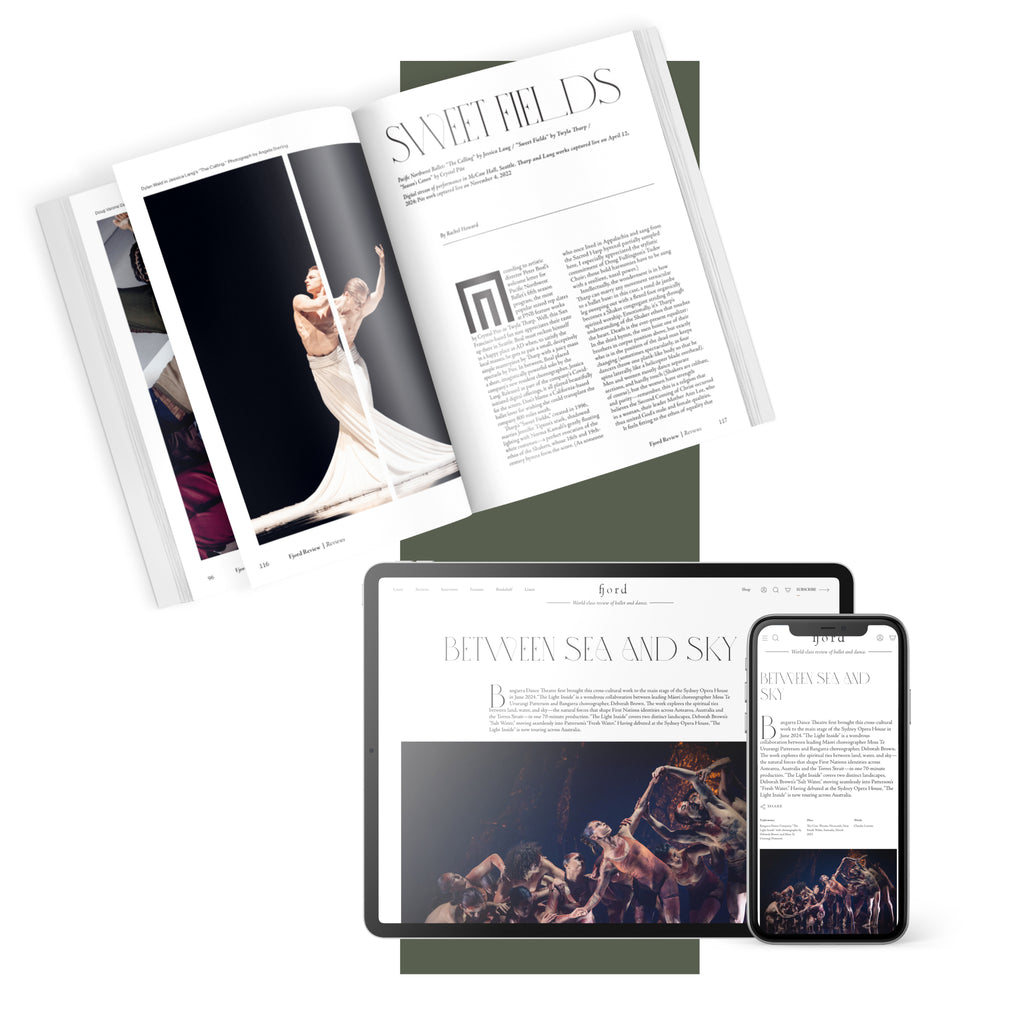
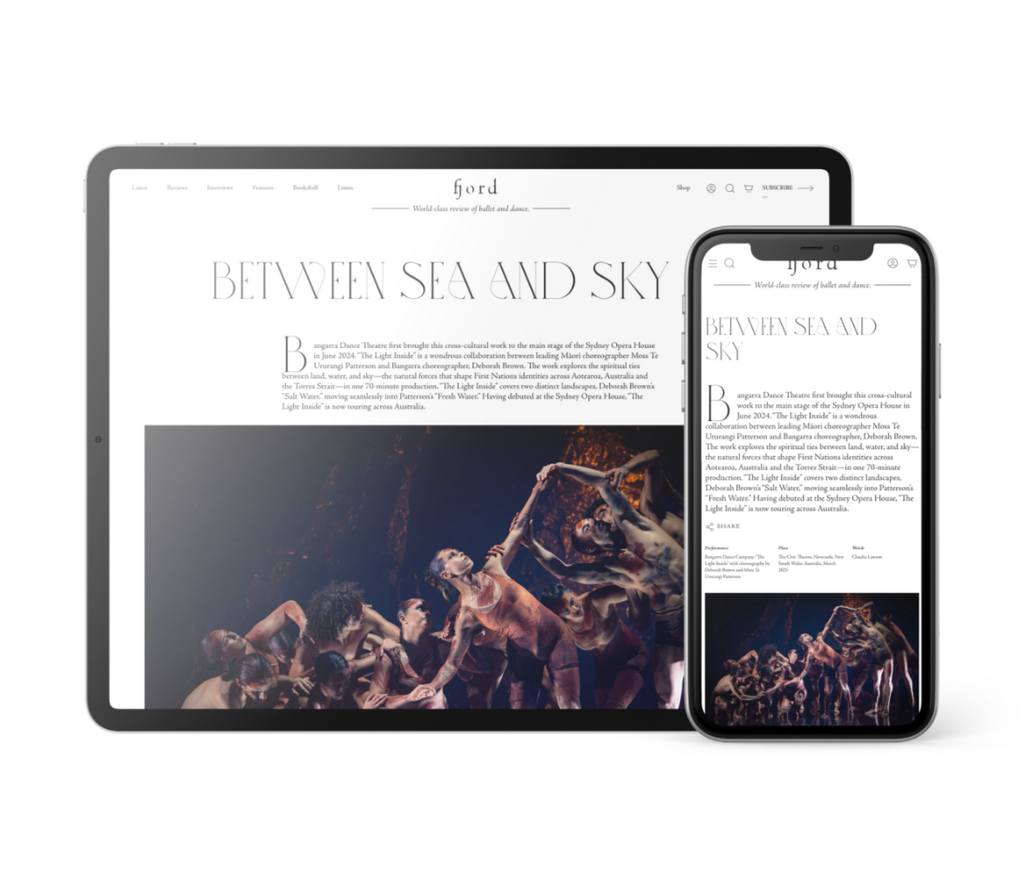
subscribe to the latest in dance
“Uncommonly intelligent, substantial coverage.”
Your weekly source for world-class dance reviews, interviews, articles, and more.
Already a paid subscriber? Login
Featured

Myth Meets Grit
“Specky Clark” opens with a bang, then a whimper. The bang is the titular Specky’s mother, dropping dead onto the kitchen floor.
Plus
Bending the Process
The sought-after choreographer Aszure Barton and award-winning composer Ambrose Akinmusire bend their individual arcs toward one another in their collaborative, multi-disciplinary work titled “A a | a B : Bend,” presented as part of Lincoln Center’s Pasculano Collaborative for Contemporary Dance.
Plus
Dreamscapes
There's a wonderful collection of photographs from 1911 of Nijinsky taken by Auguste Bert. Nijinsky was 21 and at the peak of his dance career.
Plus
comments