
If Notre-Dame remains one of the enduring symbols of Paris, standing at the city’s heart in all its beauty, much of the credit belongs to Victor Hugo. His 1831 novel not only prompted the cathedral’s restoration but reclaimed it as a living emblem of the city. The book inspired numerous stage adaptations, ballet among them. As early as 1844, “La Esmeralda” was created in London by Jules Perrot for Carlotta Grisi, to music by Cesare Pugni. The work currently on the stage of the Opéra Bastille springs from a similar impulse. In 1965, at a moment when the Paris Opéra was cautiously opening itself to modernity, its then director Georges Auric commissioned a new ballet from Roland Petit. A graduate of the Paris Opéra Ballet School some twenty years earlier, Petit had by then reached the height of his international success. After some reflection, he turned to Hugo’s novel, rediscovering in it a richness and dramatic potential ideally suited to the stage.
Performance
Place
Words


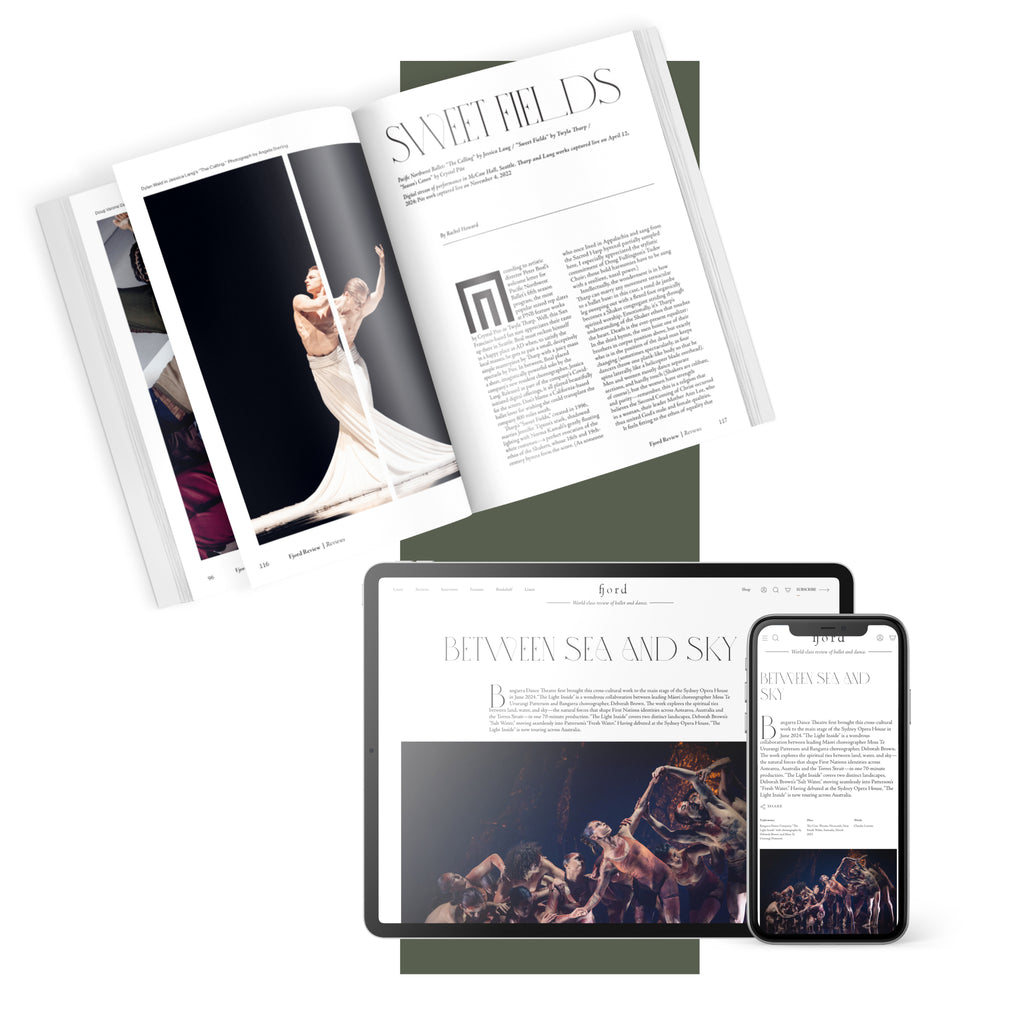

subscribe to the latest in dance
“Uncommonly intelligent, substantial coverage.”
Your weekly source for world-class dance reviews, interviews, articles, and more.
Already a paid subscriber? Login
Featured

Myth Meets Grit
“Specky Clark” opens with a bang, then a whimper. The bang is the titular Specky’s mother, dropping dead onto the kitchen floor.
Plus
Bending the Process
The sought-after choreographer Aszure Barton and award-winning composer Ambrose Akinmusire bend their individual arcs toward one another in their collaborative, multi-disciplinary work titled “A a | a B : Bend,” presented as part of Lincoln Center’s Pasculano Collaborative for Contemporary Dance.
Plus
Dreamscapes
There's a wonderful collection of photographs from 1911 of Nijinsky taken by Auguste Bert. Nijinsky was 21 and at the peak of his dance career.
Plus
comments