
On Criticism
On rare occasions, a dance seems to speak directly to me—often to my experiences as a dancer, sometimes to my humanity.
Continue Reading

World-class review of ballet and dance.
Amrita Hepi, a choreographer with Bunjalung and Ngāpuhi roots, has come a long way from her home in the Pacific. She finds herself in Cork city, my hometown, as she tours her solo work (in collaboration with theatre-maker Mish Grigor) “Rinse” across Europe this autumn. It’s an odd coincidence, one that only emphasises how small the dance world really is. Over Zoom I ask, after having sent her a list of pubs to check out if she gets the chance, how things are going on her first trip to Ireland. She tells me that after spilling some of her coffee in a café that morning about three people came to help with a chorus of ‘sorries.’ While the English are known to apologise, we take it to an Olympic level in Ireland.


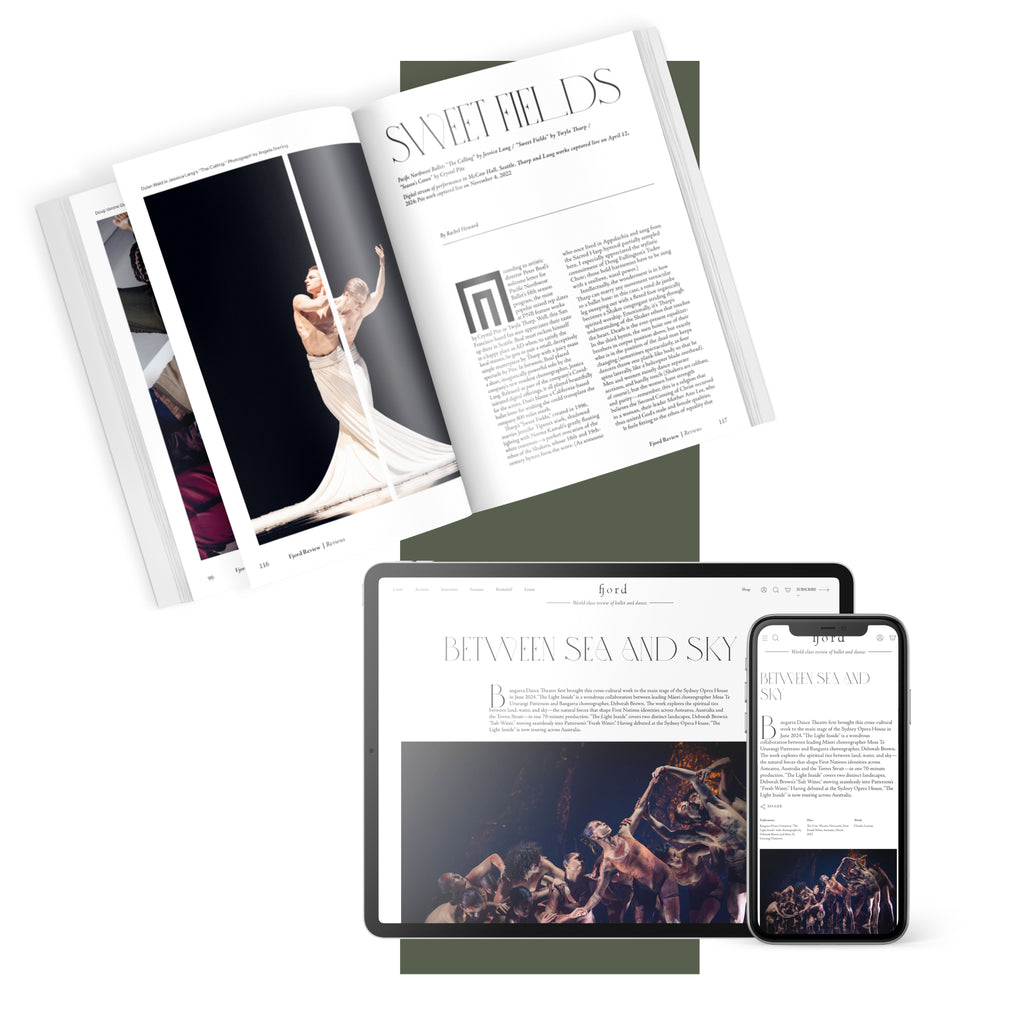
“Uncommonly intelligent, substantial coverage.”
Your weekly source for world-class dance reviews, interviews, articles, and more.
Already a paid subscriber? Login
On rare occasions, a dance seems to speak directly to me—often to my experiences as a dancer, sometimes to my humanity.
Continue Reading
I can’t take my eyes off the men. Stephen Haley, Joey Columbus, and Ian Debono each have solos in “Mazurkas” that emphasize the Limón posture full of elegance and pride.
Continue Reading
While the dancers traveled up from Florida, the Sarasota Ballet presented a taste of British sensibilities in its week-long engagement at the Joyce Theater.
Continue Reading
“This resting, patience” has been danced in cities ranging from Helsinki to Porto to Venice, and in all of them the crooning vocals of its most-repeated music, Burt Bacharach’s “What the World Needs Now Is Love,” must have been instantly familiar.
Continue Reading
comments