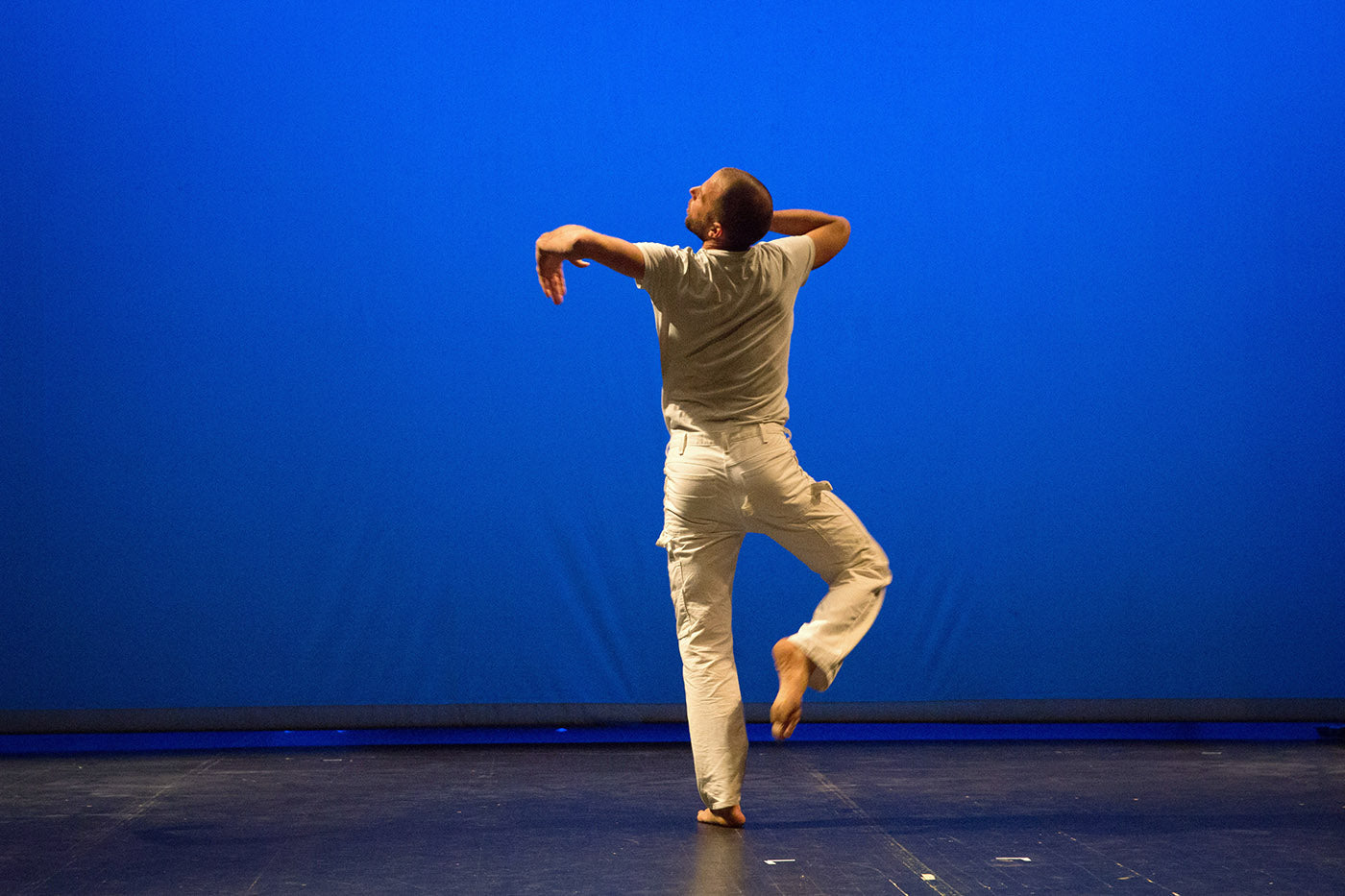
Unbound
It’s been nearly 35 years since Steve Paxton, whom the New York Times once dubbed “a titan of the 1960s and 70s avant-garde,” created and performed his solo work, “Bound.” But who’s counting?
Continue Reading

World-class review of ballet and dance.
It’s been nearly 35 years since Steve Paxton, whom the New York Times once dubbed “a titan of the 1960s and 70s avant-garde,” created and performed his solo work, “Bound.” But who’s counting?
Continue Reading
Usually based in Melbourne, the Australian Ballet is currently residing at the Sydney Opera House for the first of two Sydney seasons this year. They have premiered two ambitious works: first delivering a month-long season of Stephen Baynes’ “Swan Lake,” followed by “Vitesse,” a triple bill of contemporary works, including William Forsythe’s “In the Middle, Somewhat Elevated.” In the very same week of “Vitesse’s” premiere, the Australian Ballet gave us “Symphony in C,” an evening of divertissements followed by George Balanchine's stunning ballet from 1947, lending its name to the programme. For the third opening night within a month, I’m sure it wasn’t just me...
Continue Reading
Cue mermaids, businessmen and gumboot dancers, as well as a host of other characters, including the sultry cigarette girl, Carmen. Welcome to the wild and wonderful world of Daniel Ezralow, and his 75-minute intermissionless work, “Open,” which had its West coast premiere at the Wallis in Beverly Hills over the weekend. Ezralow, who has been a movement/theatrical pioneer for some four decades—from dancing with Paul Taylor and as an original member/choreographer of Momix (with Moses Pendleton), to founding ISO Dance and working with Julie Taymor on an array of projects, including the film Across the Universe and Broadway’s “Spiderman: Turn...
Continue Reading
“You—you alone will have the stars as no one else has them . . .” Antoine de Saint-Exupéry's Le Petit Prince in all its aphoristic wisdom will soon be on stage in the form of a ballet, to be performed by the National Ballet of Canada.
Continue Reading
What is life if not one long memento mori? This is the question Trevor Nunn and William Trevitt—co-founders of the all-male troupe BalletBoyz—have posed with their latest bill, “Life,” which reflects on mortality with two diverse, thoughtful works. It’s terrain the pair has trekked before, most recently with 2015’s “Young Men,” a meditation on the violence and emotional trauma of war. Here they uphold their knack for picking bold, engaging commissions that highlight their ten dancers’ impressive emotional range.
Continue Reading
Miami City Ballet’s week-long engagement at the Lincoln Center’s David H. Koch Theater was full of wonderful surprises, rewards, and revelations. Watching the two mixed-bill programs the company presented during the run, I couldn’t help but notice just how much at home the Miami dancers looked on the stage that is invariably associated with the illustrious New York City Ballet.
Continue Reading
Twenty years after their last production of “Swan Lake,” Scottish Ballet return with this tough but tender spin on the iconic ballet, created by internationally acclaimed Amsterdam-based choreographer David Dawson. Composer Tchaikovsky described the swan as “femininity in its purest form,” and Dawson's approach is certainly suggestive of this.
Continue Reading
In commissioning “She Said,” a triple bill featuring three new ballets by female choreographers, English National Ballet’s artistic director and lead principal dancer Tamara Rojo has challenged the status quo of contemporary ballet in two major ways. The first is a rebuke of its notoriously, dispiritingly male-dominated upper ranks (consider this: in her 20 years as a professional dancer Rojo, one of today’s most famous and decorated ballerinas, has never performed in a ballet choreographed by a woman). “We need those female voices on stage, those emotions,” Rojo notes in the programme. “We need all ways of expressing feeling.” Her...
Continue Reading
It is often said that one of a dancer’s unsung partners is the floor. In Isabelle Schad’s and Laurent Goldring’s 45-minute opus, “Der Bau,” one might consider Schad’s partner to be large swaths of fabric that she manipulates during the course of a physically intense, metaphorically-driven work. Based on Kafka’s unfinished novella, The Burrow (Der Bau), a tale describing the universe of an animal entrenched in a place to make it feel protected, the piece deals with the relationship between body and space.
Continue Reading
Celebrating the contemporary dance community in the City of Angels, the indefatigable Deborah Brockus has mounted her latest iteration of the LA Dance Festival since founding it in 2012. Bringing together 28 troupes over four nights (with nine separate performances)—as well as offering classes—Brockus has been producing events like these for years, including the Spectrum Dance in LA series, which received a Lester Horton award for “Outstanding Production of a Festival or Series” back in 2002.
Continue Reading
What do gestures become when stripped of their in-the-moment communicative purposes? South American choreographer Luis Garay borrows the word “maneries” from Italian philosopher Giorgio Agamben, who, in his book The Coming Community, analyses the word’s etymology and comes to a conclusion that is mirrored by Garay’s program notes on the dance: “‘Maneries’ refers to neither a universal nor a particular; it embraces both, like an example.”
Continue Reading
Seeing dance in New York City is always an exciting grab-bag of movement invention and ideas. But, the companies and performers in New York can be increasingly, well, New York. Much of the work presented at our many institutions (and there are many), outside of NYC-based artists that is, are of an international set. In this city, it often seems easier to catch the latest import from Belarus or Budapest than from Boise. That is why the recent trio of works by the Pennsylvania Ballet at the Joyce Theater was a singular treat; an American company in NYC that was...
Continue ReadingLong before the dancers take the stage, Dance Theatre of Harlem’s season at New York City Center feels like one of the most energizing cultural events of the spring.
Continue ReadingIt is rare for George Balanchine’s grand, bedazzled “Symphony in C” to open a program. Its champagne-popping finale for 52 dancers tends to be a nightcap.
Continue Reading
The Spring is Blooming festival, by Dance Reflections by Van Cleef & Arpels, now in its fifth year, has become a highlight of the spring dance circuit.
Continue ReadingAs the audience come to their feet at the end of this ballet there is a noted difference to be seen on stage. Three women stand with joined hands, taking their call as the romantic leads of a loud and proud lesbian ballet.
Continue ReadingOne of San Francisco Ballet’s greatest assets is its home venue, the Beaux-Arts style War Memorial Opera House, with four rings of seating that require performers to project their energies practically to the exosphere.
Continue Reading