This site has limited support for your browser. We recommend switching to Edge, Chrome, Safari, or Firefox.

Logical Progression

When Wally Cardona and Molly Lieber enter to take their places on opening night, they’re stepping into the footprints of a venerable dance legacy. This is the Soho loft where David Gordon and Valda Setterfield first performed “Times Four” 50 years ago. Yet, as the two performers step forward and sweep a foot into attitude front, Cardona and Lieber immediately claim the space. In the intimate dance studio under ambient overhead lighting and ringed on four sides by a single row of folding chairs, these performers radiate a captivating presence. “Times Four/David Gordon: 1975/2025” is a seamless collaboration between artists past and present.

Performance

“Times Four/David Gordon: 1975/2025,” original choreography by David Gordon with additional choreography by Wally Cardona

Place

New York Live Arts (Remote), New York, NY, October 22, 2025

Words

Karen Hildebrand

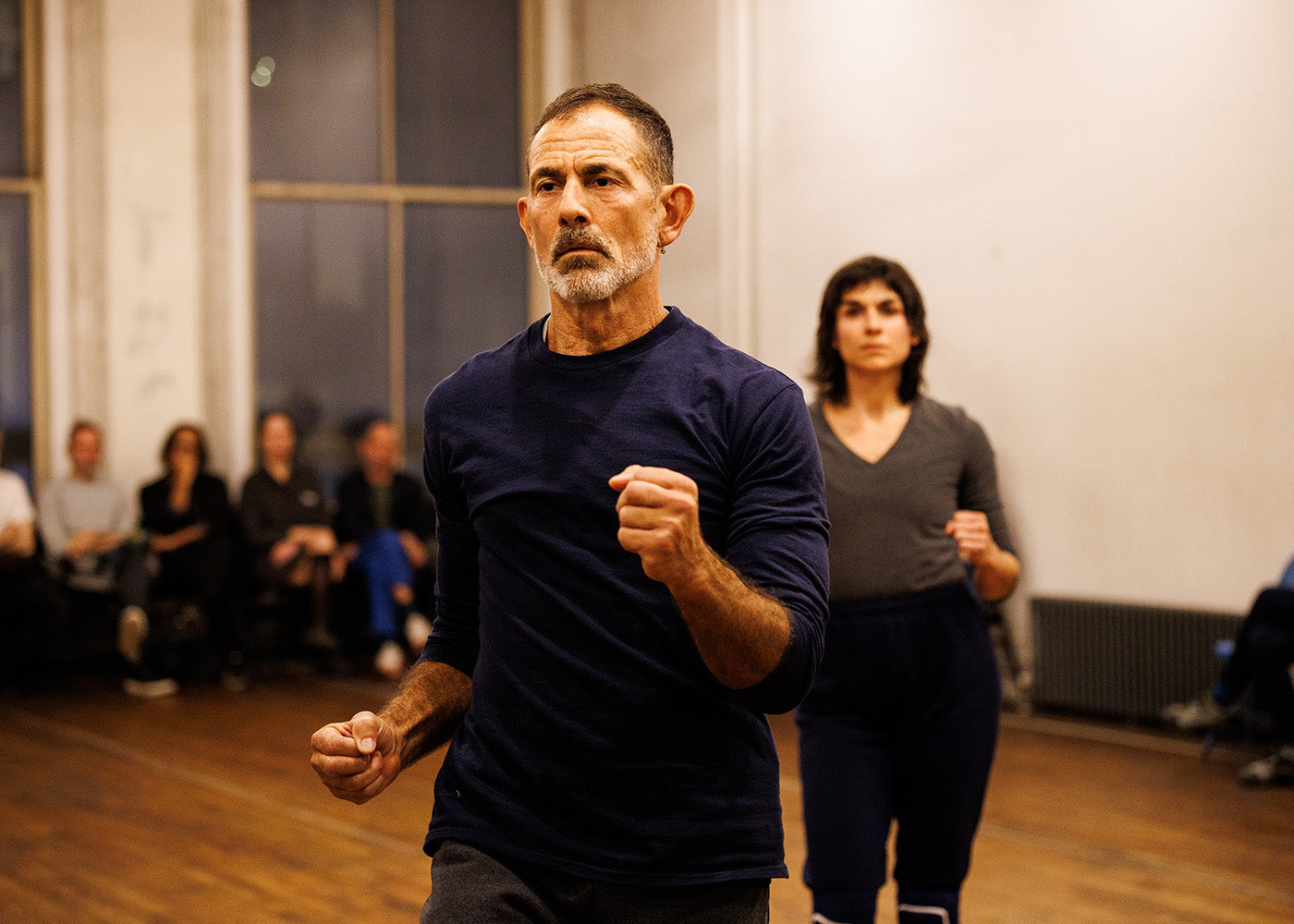
Wally Cardona and Molly Lieber in “Times Four/David Gordon: 1975/2025.” Photograph by Maria Baranova

Performed in silence, “Times Four” is a series of movements that repeat and increase in complexity, performed without dancerly embellishment. Simple and clean, the vocabulary is a study in presence. Something as subtle as a shift to diagonal facing is big news.  

At first the dancers maintain square facing, turning in a clockwise direction to repeat each pattern four times, in the manner of Indigenous Americans, who ceremonially acknowledge the four compass directions. The repetition and progression of “Times Four” create a kind of maze. An attempt to follow can get one lost. I’m reminded of philosopher Gurdjieff’s sacred dances designed to reach a higher state of consciousness—absent of meaning and yet filled with intention. 

When Gordon first made “Times Four” in 1975, he was part of the Grand Union, a downtown group that prized spontaneous, improvisational work. He had arrived there from the experimental ground of Judson Dance Theater, with a preference for every day movement by untrained performers. Before he died, he planted a seed for Cardona to carry the piece forward. What existed for reference was a grainy video, a few photo stills, and Setterfield’s handwritten notes. 

When I say “without dancerly embellishment,” I mean the performers stand with everyday posture, arms hanging at their sides, relaxed hands. Lieber has a bit of a slouch. No turnout, no springboard tension. Neutral faces. They wear the detachment of a calisthenics routine. The patterns and sequencing are satisfying in their logic, conducted in a relaxed unison. The performers seem to do what the body might naturally do—if graced with impeccable alignment, core strength and confident presence. And yet, I imagine the mental exertion of the hour-long piece: the repetitions, the changes in facing, shifts in weight, the timing.


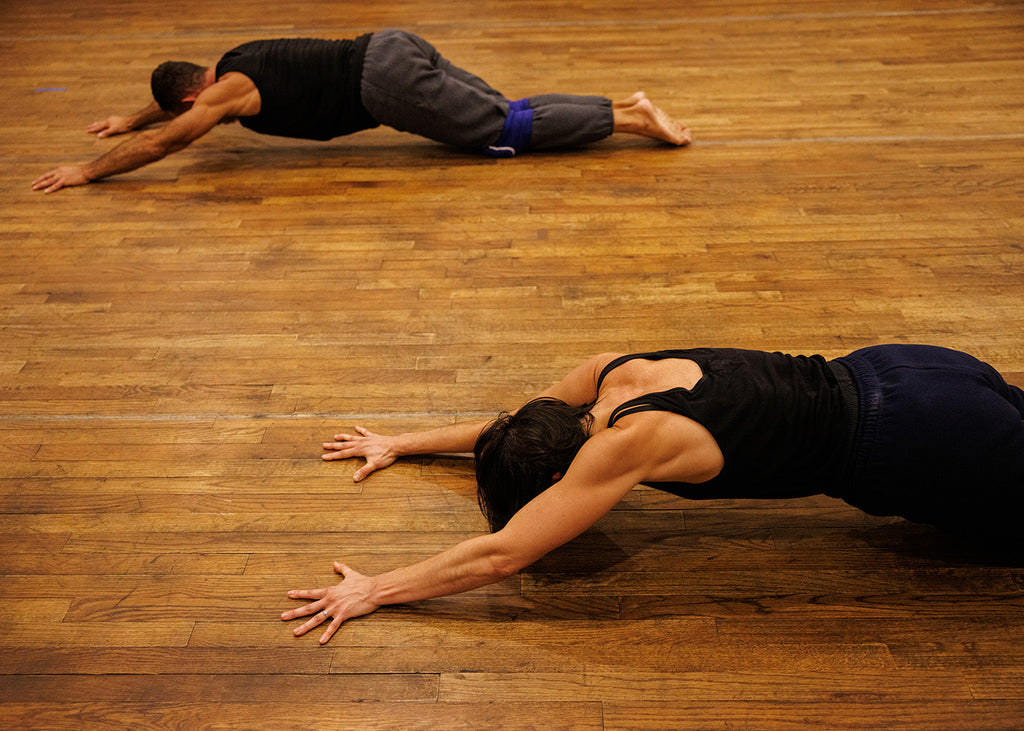
Wally Cardona and Molly Lieber in “Times Four/David Gordon: 1975/2025.” Photograph by Maria Baranova

Wally Cardona and Molly Lieber in “Times Four/David Gordon: 1975/2025.” Photograph by Maria Baranova

In a post-program note, Cardona writes about the collaborative process of reconstruction, and how the animating question evolved from “what would THEY do?” (David and Valda) to “what would WE do now?” (Wally and Molly). Though I can’t point to exactly where the choreography makes this shift, the series does gradually grow more physical. The calculated space that dancers maintain between them widens. They move between floor and standing more often and quickly. A certain humor emerges. For example, after holding a low forearm plank position uncomfortably long, they each finally release to the floor, one after the other, with an audible thunk. It’s like they were seeing who could last longer. At a certain point, they remove several layers of clothing to go from long sleeved t-shirts, sweatpants, and knee pads to shorts and tank tops. It felt like a symbolic tossing of David and Valda to the corner in order to free their own investigations.

The environmental sounds become a score of sorts: the floor creaking, the sound of a bare foot brushing the wood then slapping the opposite ankle, a hip clunking to the floor. Add to that the shriek of a siren outside on Broadway, a rapper’s voice rising. The audience, on the other hand, is absolutely quiet. The proximity of the dancers has us holding our breath. When Lieber does a forward bend in front of my seat, she’s close enough that I can see the articulation of each knob in her spine. When Cordona stretches out prone, I skootch my feet to make way.

Just as I’m wondering how much longer this will go on, I notice signs the piece is winding down. They finish a section of a great many floor variations. This time, when they stand, they walk as if they were to begin again from the first steps of the evening. Back to David and Valda. They come together side by side, circle in place, whip their heads around as if someone has called their name, then return to center, tipping the head forward to take a modest bow in each of the four directions. 

Karen Hildebrand


Karen Hildebrand is former editorial director for Dance Magazine and served as editor in chief for Dance Teacher for a decade. An advocate for dance education, she was honored with the Dance Teacher Award in 2020. She follows in the tradition of dance writers who are also poets (Edwin Denby, Jack Anderson), with poetry published in many literary journals and in her book, Crossing Pleasure Avenue (Indolent Books). She holds an MFA from the Program for Writers at Warren Wilson College. Originally from Colorado, she lives in Brooklyn.

subscribe to the latest in dance


“Uncommonly intelligent, substantial coverage.”

Your weekly source for world-class dance reviews, interviews, articles, and more.

Already a paid subscriber? Login

comments

Please note, comments must be approved before they are published

Featured

Topographies of Dance
REVIEWS | Greta Pieropan

Topographies of Dance

The first edition of the Tanztriennale in Hamburg, back in June, unfolded like an emotional topography: a landscape shaped by care rather than by theme; under the co‑direction of Monica Gillette and Gwen Hsin‑Yi Chang, Tanztriennale operated as a temporary commons: a place where choreography, conversation and community are allowed to influence one another.

Continue Reading
Filming La Danse
Elsa Giovanna Simonetti

Filming La Danse

In a context such as the Venice Biennale, where you can easily run into ballet stars across the Arsenale and dance alongside them in workshops, it felt especially apt to pay tribute to a filmmaker who, with extraordinary care, intelligence and unsentimental clarity, brought us so close to the hidden mechanics of dance: Frederick Wiseman.

Continue Reading
Ode to Authenticity
REVIEWS | Rachel Howard

Ode to Authenticity

Launched in 2020 after the hashtag #maleballerina went viral, Ballet22 is driven by a mission all the more urgent since the current presidential administration resumed its attacks on the LGBTQ community.

Continue Reading
Five Remembrances of a Benefactor
Obituaries | Rachel Howard

Five Remembrances of a Benefactor

The way Margaret Jenkins tells it, Dianne came to her dance company’s studios in 1973, asking to take class. Dianne was then living in a one-bedroom apartment near San Francisco’s Mission District with her scientist husband and three young kids.

FREE ARTICLE
Good Subscription Agency