
Shakespearean Twist
It’s a drag to report that I had the urge to walk out of my first performance back in NYC after a long summer break.
Continua a leggere

World-class review of ballet and dance.
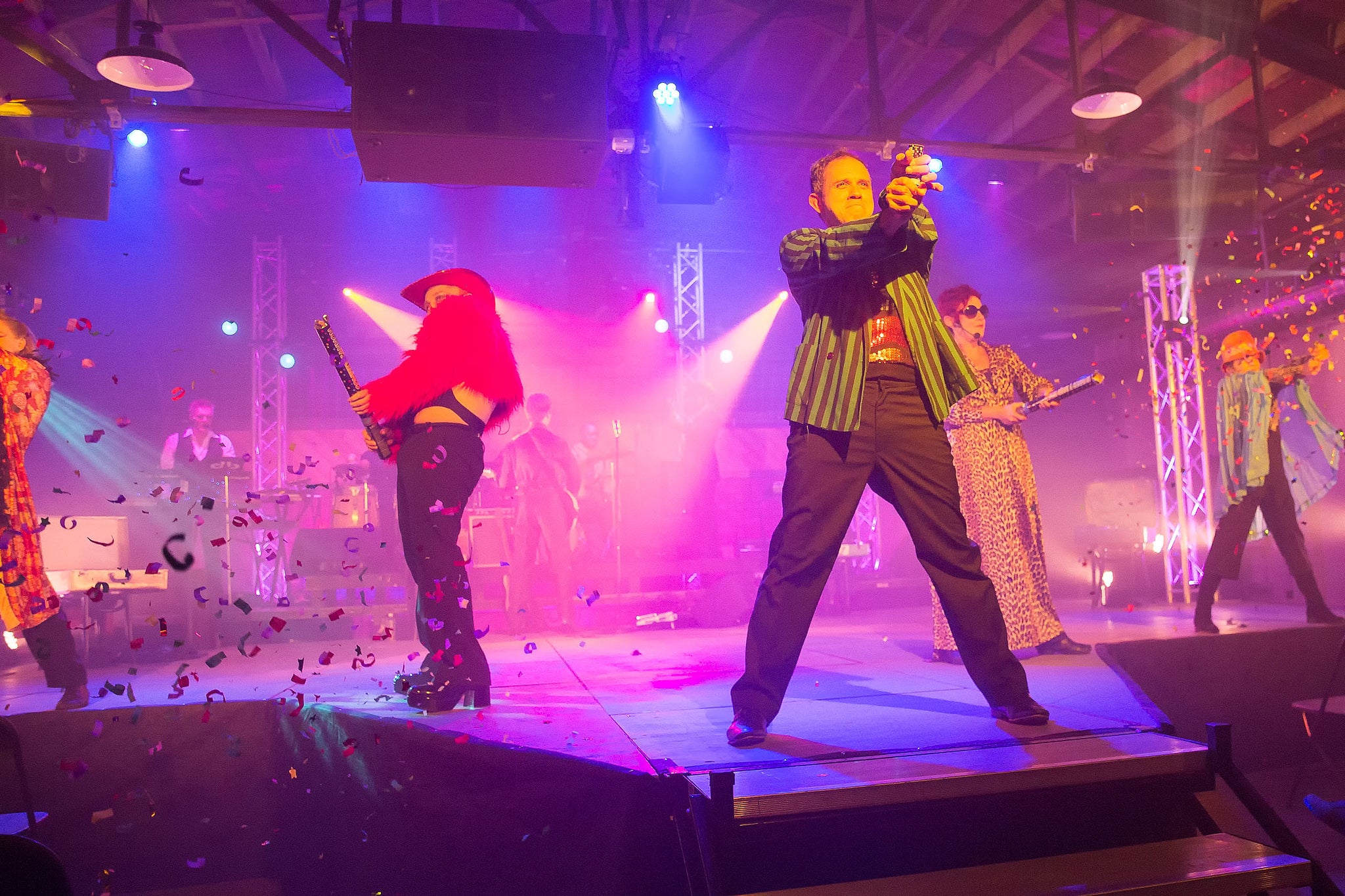
“The Bowie Project,” the brainchild of Austin-based choreographer Andrea Ariel, whose other credits include the choreography for the film Waiting for Guffman and a three-part dance-theatre series on the floating garbage patch in the North Pacific Gyre, was an exercise in personae, layering, fragmenting, and improvisation. The performance, which incorporated three dancers, the David Bowie tribute band Super Creeps, and three members of New York’s Strike Anywhere Performance Ensemble, utilized Soundpainting, a “composing sign language” invented by musician Walter Thompson. Working with Thompson, Ariel adapted and expanded the vocabulary of music-focused conducting gestures—they look a bit like the gestures one makes during a game of charades—for dance and performance. Through Soundpainting with a bank of Bowie songs, text from his interviews, and movement sequences within a predetermined arc, the show facilitated an engagingly disorienting dive into the most outwardly colorful period of Bowie’s life and work: the 1970s.
Performance
Place
Words
“Uncommonly intelligent, substantial coverage.”
Your weekly source for world-class dance reviews, interviews, articles, and more.
Already a paid subscriber? Login
It’s a drag to report that I had the urge to walk out of my first performance back in NYC after a long summer break.
Continua a leggere
Things seem to be clicking in place for Mamela Nyamza. Her latest work “The Herd/Less” is touring the world while her recognition as a choreographer with a distinction for the subversive and political has earned her a Silver Lion for dance at the Venice Biennale.
Continua a leggere
After taking a field trip in the second grade to see the Alvin Ailey American Dance Theater, Ronald K. Brown was inspired to take his first dance class at Bedford Stuyvesant Restoration Corporation, a Brooklyn-based community center.
Continua a leggere
As much as it is a cliché to reference, there is something special in finding a work that so aptly fits that famous quote from George Balanchine: “See the music. Hear the dance.”
Continua a leggere
comments