Questo sito non supporta completamente il tuo browser. Ti consigliamo di utilizzare Edge, Chrome, Safari o Firefox.

Multifaceted Jewel

At the New National Theatre in Tokyo last week, the National Ballet of Japan’s (NBJ) triple bill, “Ballet Coffret,” indeed offered up three jewels of dance: the traditional, the modern and the multi-faceted. Even with a somewhat dulled start, it was a glittering afternoon as artistic director Miyako Yoshida presented three distinct works, each making a bold, balletic statement about the company.

Performance

National Ballet of Japan: “The Firebird” by Michael Fokine / “The Vertiginous Thrill of Exactitude” by William Forsythe / “Études” by Harald Lander

Place

New National Theatre, Tokyo, Japan, March 2025

Words

Kris Kosaka

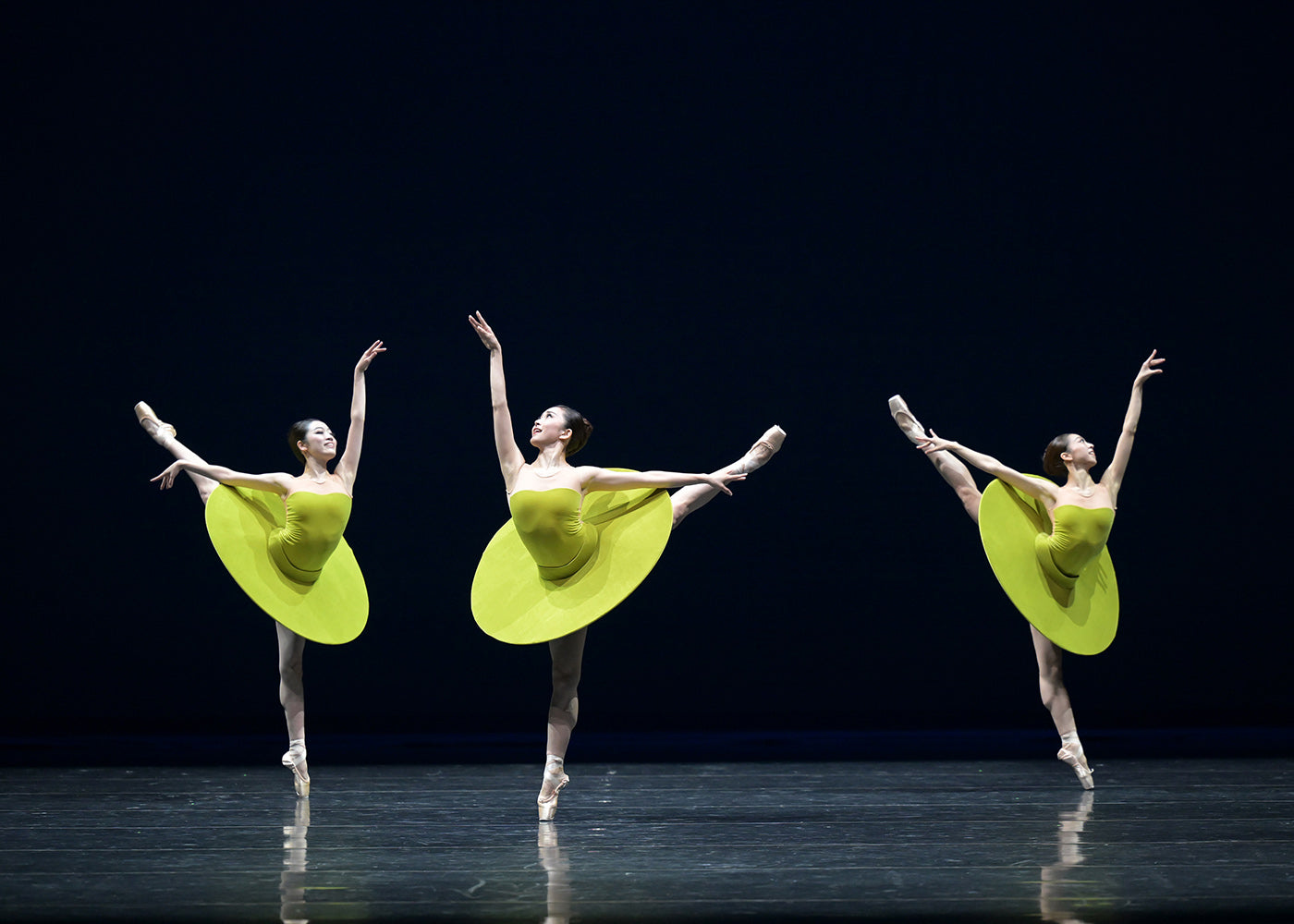
National Ballet of Japan in “The Vertiginous Thrill of Exactitude” by William Forsythe. Photograph by Takashi Shikama, courtesy of the New National Theatre Tokyo

The 2025 Coffret opened with a performance of “The Firebird,” faithful to the original staging of the Michael Fokine choreographed, Igor Stravinsky, one act classic. Like a precious heirloom that still maintains its outdated, somewhat lackluster elegance, there was still a lot to admire.  

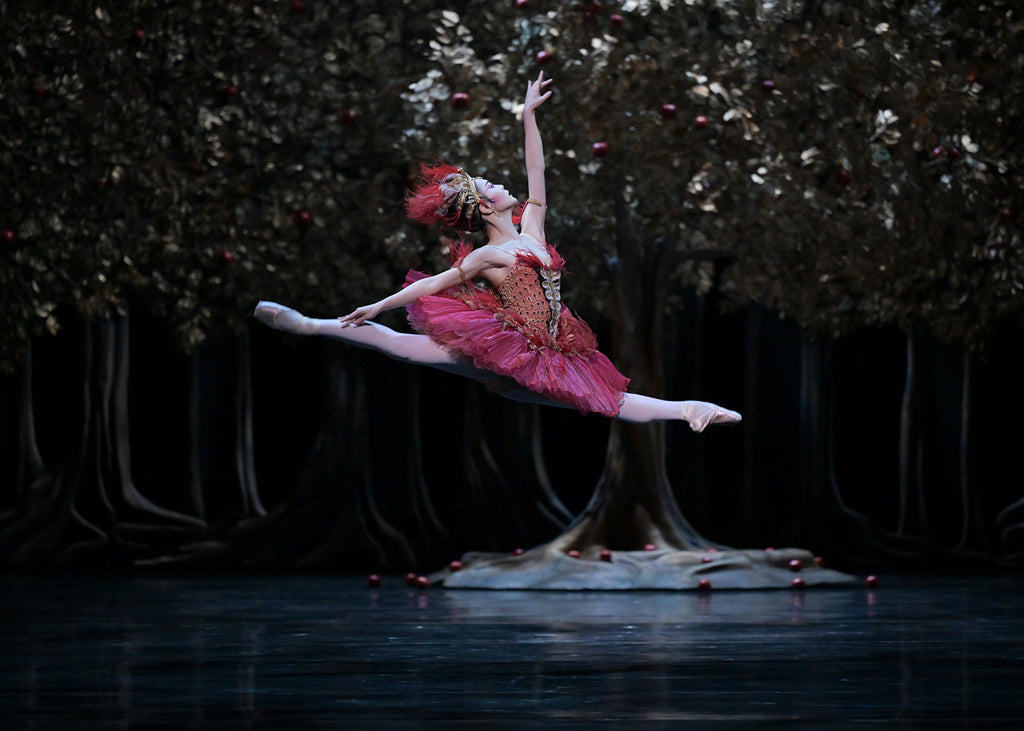
In Fokine’s version, only the Firebird’s choreography really matters, and first soloist Risako Ikeda rose stunningly to the occasion. Ikeda’s brilliance was truly impressive, from her quick footwork to her expressive arms, her light leaps and explosive jetés. Full of verve and confidence, Ikeda imbued the Firebird with a lively cunning, at turns diabolical and whimsical. When Ivan Tsarevich (Takuro Watanabe) captures her in the magical forest, there is no sense of fear—only playful deliberation as the cool Firebird considers how best to proceed.  

Later, she brings the same sense of cold detachment to her dominant majesty over the (not so) Immortal Kostchei, (irresistibly strange as portrayed by Masahiro Nakaya) and his army of fey minions, all brilliantly costumed by Natalia Goncharova. It’s a surreal feast for the eyes as Ikeda’s imperious authority directs the dancers into increasingly frenzied, highly entertaining sequences until the final shattering climax.  

Despite these flashes of brilliance, there are reasons “The Firebird” has been repeatedly updated over the decades, by George Balanchine over several iterations or more recently by Alexei Ratmansky in 2012. Watanbe as Tsarevich has nothing much to do with dancing at all except some ho-hum partner work; Tsarevna (Misato Uchida) and the Enchanted Princesses, garbed in long white dresses here, bring a dreamy elegance to the magical forest, but don’t add much for dance, although I admired their sprightly apple-tossing. 

The long denouement forsakes choreography altogether for a ceremonial, royalist staging as harmony is restored and the kingdom reclaimed. For traditionalists (like many Japanese ballet fans in the audience) this pageant is undoubtedly as expected. It makes a clear statement to the Company’s fealty to classical ballet, honoring its traditions in Sergei Diaghilev’s iconic Ballets Russes with one of its most beloved works. 

Risako Ikeda in “The Firebird” by Michael Fokine. Photograph by  Takashi Shikama, courtesy of the New National Theatre Tokyo

Risako Ikeda in “The Firebird” by Michael Fokine. Photograph by Takashi Shikama, courtesy of the New National Theatre Tokyo

After a brief intermission, thankfully, the rest of the afternoon truly shines. Next up is William Forysthe’s modern classic, “The Vertiginous Thrill of Exactitude.” “Vertiginous” feels even more fresh and modern after “The Firebird,” a savvy choice of programming by Yoshida.  

Neon green, circular tutus for the women and pink leotards for the men with racy open backs (Stephen Galloway on costumes) instantly renders the staging visually arresting. The bright colors capture the eye while the clean leaps and technically exacting footwork astounds. 

Mesmerizing in its technical exactitude and its exhilarating, staggering joie de vivre of movement, the overall performance was such an explosive, exciting 15 minutes, my eyes remained happily captive for every second. 

Created in 1996 and known for precision and pacing as its name suggests, the five dancers truly excelled (Yuzuki Hanagata, Suzu Yamamoto, Maho Higashi with Ryosuke Morimoto and Yuki Kaminaka)—and none of them are even first soloists yet. Exuberant, talented youth, broadcasting the depth of the company: here was the NBJ equally committed to modern works, like a riotous shout into the future. 

 From left: Yuki Yamada, Saho Shibayama, and Shunsuke Mizui of the National Ballet of Japan in “Études” by Harald Lander. Photograph by Takashi Shikama, courtesy of the New National Theatre Tokyo

From left: Yuki Yamada, Saho Shibayama, and Shunsuke Mizui of the National Ballet of Japan in “Études” by Harald Lander. Photograph by Takashi Shikama, courtesy of the New National Theatre Tokyo

The afternoon ended with the company premiere of Harald Lander’s “Études.” If “Firebird” made a statement about the company’s faithfulness to classical traditions, and “Vertiginous” asserts its modern, youthful sensibilities, then “Etudes” showcases the strength of the company as a whole.  

Approaching their 30th year of existence, the NBJ deserves their place at the top of the ballet world in competitive, ballet-crazy Japan, and this work proves it. It’s a ballet carefully structured to show off technique and depth, and so NBJ did, joyous presence and explosive skill. The evolution of how the words of ballet become full narrative form is gorgeously divulged from the barre to sequences or in the progression of turns from beginner rotation to professional spin, a love letter to the art form, rich in development and style. 

Highlights include the stately advance of turns to spins and then leaps; or the movement from basic foot positioning to flutterings to leaping cabrioles; how pirouettes add extensions and transform to dazzling fouettés. Again, the youth of the company rose to the occasion. Saho Shibayama as the Ballerina and Shunsuke Mizui and Yuki Yamada as the Danseurs led the way as dancers from all levels of the company revealed impeccable form and artistic staging. From the opening notes to the closing sequence, their energy and skill never waned. 

The Tokyo Ballet, a friendly rival to NBJ, has performed “Études” since 1977, but NBJ’s resounding success and its premiere of this ballet sends a clear message. Move over, K-Ballet Tokyo and the Tokyo Ballet. Luckily, there’s room at the top in the metropolis’s vibrant ballet scene. 

Kris Kosaka


Kris Kosaka is a writer and educator based in Kamakura, Japan. A lifelong ballet fan and studio rat in her youth, she's been contributing to the Japan Times since 2009. She writes across culture, but especially in dance, opera and literature. 

subscribe to the latest in dance


“Uncommonly intelligent, substantial coverage.”

Your weekly source for world-class dance reviews, interviews, articles, and more.

Already a paid subscriber? Login

comments

Ricorda che i commenti devono essere approvati prima di essere pubblicati

Featured

Meryl Tankard, Staying Connected
INTERVIEWS | Eoin Fenton

Meryl Tankard, Staying Connected

Meryl Tankard is somewhat of an Aussie dance legend. A choreographer of international renown, her works have been mounted and premiered on prestigious companies ranging from Royal Ballet of Flanders and NDT III in Europe, to the Australian Ballet and Sydney Dance Company in her homeland.

Continua a leggere
Moondance
REVIEWS | Faye Arthurs

Moondance

The Mark Morris Dance Group, now celebrating its 45th anniversary, visited the Brooklyn Academy of Music for a quick late-March run with two topical dances that were new to New York: one heavy and one light.

Continua a leggere
Simply Red
REVIEWS | Rachel Howard

Simply Red

Do ballet trends bubble up cyclically, or did artistic directors collude to engineer this year’s “Firebird” mania? Suddenly this spring, the flaring-eyed creature immortalized in Stravinsky’s 1910 score is headlining programs at American Ballet Theatre, New York City Ballet, and Dance Theatre of Harlem, almost all at once.

Continua a leggere
Good Subscription Agency